Tuesday, September 19, 2006

SEC Chairman Cox: Sarbanes-Oxley not unique in world, U.S. just early adopter

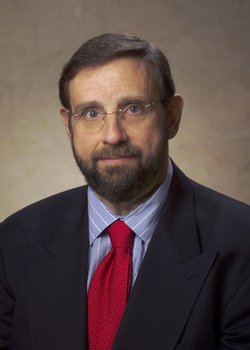
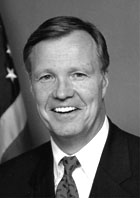
Securities and Exchange Commission Chairman Chris Cox today testified before the House Financial Services Committee. A copy of his testimony can be read here. The title of today's Committee session was "Sarbanes-Oxley at Four: Protecting Investors and Strengthening the Markets" and the central question was whether the Sarbanes-Oxley Act of 2002 is undermining the competitiveness of U.S. capital markets.

(Mark Olson, chairman of the Public Company Accounting Oversight Board, the U.S. auditing company regulator, also testified. His written testimony can be read here.)

Cox's testimony made several key points:
  1. Sarbanes-Oxley has, for the most part, proven extremely successful, improving investor confidence, increasing corporate transparency, and improving auditor oversight. Overall, most SOX provisions are a net contributors to the nation's economy.
  2. A little-noticed fact about SOX has been that most of its key provisions have been adopted by other countries around the world. "As we consider the effect of Sarbanes-Oxley on U.S. competitiveness, it is important to keep in mind how broadly many of its tenets have been taken up overseas. It would appear, four years later, that America's approach is not unique -- we just happened to be early adopters. "
  3. The one part of SOX that hasn't worked well is Section 404, and the SEC believes that this is an issue of implementation that can be corrected and the SEC is working to correct.
This last point seems clear, and if you are into the technical aspects of SOX, what he said will be heartening. Cox admitted that Section 404 has proven more expensive than Congress or the SEC expected, particularly for smaller companies (Cox was a Congressman when SOX was passed). While Section 404 may be benefiting larger companies, there are questions whether the costs outweigh the benefits for smaller issuers. However, since it is uncertain whether the SEC has the legal authority to exempt smaller companies from Section 404's internal control provisions, Cox said the SEC has instead decided to postpone implementation for smaller companies until the PCAOB has time to adopt improved implementation rules which will not be so expensive.

On this same issue, Congressman Tom Feeney (R-Florida) suggested that Section 404 could be improved by introducing a de minimis standard of 5 percent of the company's gross sales. In other words, if the company's internal controls are off by 5 percent of the company's sales (in Walmart's case, let's say $2 billion), the company wouldn't have to revise its financial statements or worry about correcting the internal controls. I don't know about you, but if my internal controls were off by $2 billion, I think I'd want to know about it. (Feeney also asked whether all the recent corporate accounting restatements were necessary and did investors really care if the company got its financial statements wrong. There's an easy answer to that one, Tom--what did the company's stock do when the need for a restatement became public? If the stock dropped, investors probably cared.)

Cox's comments on the international aspects of SOX were also interesting. In response to a question asking about the recent UK Balls Clause and possible cross-border mergers between the New York Stock Exchange and Euronext or NASDAQ and the London Stock Exchange, Cox responded that the SEC has stated repeatedly that it has neither the intention nor the legal power to impose Sarbanes-Oxley abroad. Congressman Mel Watt (D-North Carolina) then asked how U.S. investors investing abroad in less transparent markets ("France" being the example given) could be protected if Sarbanes-Oxley did not apply to them. Cox answered that while "regulatory arbitrage a real issue," the SEC "works closely" with its foreign regulatory counterparts, and "we want to have an understanding that we live in a high standards world. We [in the U.S.] have the highest standards and the largest market, and I like to think this is not unrelated." Cox pointed out that the number of other large markets adopting SOX-like provisions (clearly referring to a recent study by the SEC's Office of International Affairs) indicates that other markets see the value of having higher quality regulatory standards.

When asked about why so many foreign IPOs have occurred abroad rather than in the United States, Cox pointed out (as this blog did here--glad to see he's a reader) that the largest of these foreign IPOs involved state-owned companies with a preference for listing in their home markets and that many were "unable to live up to our standards of transparency." The rest list elsewhere for a variety of reasons, including the high litigation risks in the United States, but also the increasing pools of liquidity that can be tapped in developing markets around the world. Cox added that, in a sense, the U.S. is a victim of its own success, since it for years has been advocating markets as a solution to poverty and development, and other countries had "finally taken us up on this." As a result, increased market competition was something that U.S. exchanges were going to have to get used to, but that this competition was good for both America and the world.

Nice to see a Republican who actually still believes in markets.

Monday, September 18, 2006

It's not SOX; London is just better

Clara Furse, chief executive of the London Stock Exchange, has an op-ed in the Financial Times today ("Sox is not to blame – London is just better as a market") adding to the transatlantic pissing match between the London Stock Exchange/H.M. Treasury/UK Financial Services Authority and the New York Stock Exchange/NASDAQ/Securities and Exchange Commission. Nothing is more fun to watch than regulators and finance firms in a cat fight, huh? Huh?

Even so, as I keep telling all you doubters out there, this really is a high-stakes game for both countries, even if it does seem so dreadfully boring. (To give it some context, think about how much the Iraq war has cost the United States so far--maybe $300+ billion? The total market capitalization of all the companies trading on just the New York Stock Exchange is $21.2 trillion. That's with a "t". $7.9 trillion of that are foreign companies. You skim 1/10th of 1 percent off just those foreign listers in terms of fees, etc. and you've practically paid for a full year of Congressional "Emergency Supplemental Appropriations".)

At any rate, Furse makes the following argument:

At one level, it has been suggested that international companies listing outside America want to avoid submitting themselves to the highest standards of regulation. As the head of one US exchange put it: “By setting the bar so high in the US, Sox has had the unintended consequence of triggering a ‘race to the bottom’ by stock markets and companies.”

This line of argument may reflect a combination of sour grapes and a tendency to believe that bigger must mean better; that in creating the world’s heaviest rulebook the US has also created the most effective and trusted regulatory environment. However, this view does a disservice to both the international companies that are coming to London and the world-class standards of regulation to which they aspire.

Indeed, London’s principles-based regime, rather than a more prescriptive rules-based approach, continues to prove itself as a model that facilitates pro-competitive innovation in a tough but sensible regulatory environment. All the important independent corporate governance surveys confirm that the UK is number one for corporate governance standards.

At a more practical level, US market participants do recognise the strength of the negative sentiment towards Sox, in particular from smaller companies for whom the cost – in time, dollars and legal risk – represents a serious disincentive to growth via initial public offerings. These participants are hopeful that, with some minor modifications to the law, US markets will once again attract the lion’s share of international listings.

This hope underestimates the attractions of the City of London and its competitive pedigree. The truth is that Sox has become a convenient focal point for explaining away the success of London’s financial district. It is easy to forget that the City has a strong track record in competing for international listings. At the end of 2000, long before Sox, there were 532 international companies on the LSE compared with 488 on Nasdaq and 433 on the NYSE.

London’s competitive advantage is clear: it has the world’s deepest pool of international liquidity; it has a wide range of institutional emerging market investors; it has broad analyst coverage; it offers an unrivalled choice of markets on which to list; it is the gateway to a budding eurozone; and, critically, the City promotes world-class regulation and corporate governance standards. This is why the profile associated with an LSE listing provides real value. London offers a highly competitive product to companies who seek to join the global economy, enhancing growth prospects around the world, helping to build new economies and providing hope through prosperity.

Furse makes some interesting points. She also claims some absurdities.

First, it is probably accurate that London has a cheaper, more efficient market. You can list in London and pay less in transaction costs than you can in New York, where investment bank underwriters will charge you so much to hawk your IPO that some companies (such as Google) have decided to go it on their own through a Dutch Auction. That is a serious concern for New York, and one they will have to address in this increasingly competitive global capital market. And the Sarbanes-Oxley Act has nothing to do with it.

But the other claims are disingenuous. London does have a largely principle-based regulatory regime which, as opposed to the supposedly "rules-based" American approach, sets out broad objectives (such as "be honest") and lets you figure out what that means. There is nothing theoretically wrong with this approach. After all, God Himself gave Moses only 10 "principles". And the UK goes one step further by making most of these principles "comply or explain" (sorta like me saying, "God, I am not going to comply with your "Thou shalt not steal" provision because I can imagine myself being in a Les Miserables-type situation where the need to steal a loaf of bread might arise...") The problem with a principles-based approach, of course, is that it is meaningless if not backed up by a strong enforcement mechanism and some kind of respected judging mechanism. (God, of course, being omniscient and infinitely just, can pull this off. But, as I discuss here, the UK FSA, with its 12 enforcement cases per year, probably can't.)

Second, Furse points to the UK's corporate governance system as an example of how the LSE's regulatory standards are world-class. This brings up two interesting points. The UK's corporate governance standards are world class, but (except for the comply-or-explain provisions), they are also hardly principle-based. In fact, the UK expressly prohibits a wide range of corporate governance activities (such as staggered boards of directors and other anti-takeover devices) that are permitted in the United States. The UK corporate governance rules are far more proscriptive than Delaware's (which really are principles-based, to the point where they let you get away with anything). At the same time, corporate governance is just one aspect of securities regulation. In other areas, the UK takes a decidedly hands-off approach to regulating even clearly problematic issues, such as the transparency of bond markets and securities analyst conflicts of interest.

Third, given the size of the LSE, I don't quite understand how Fruse can make the claim that the London Stock Exchange has the "deepest pool of international liquidity". What does this mean? As a general matter, how can a market with a $7 trillion market cap have deeper liquidity than a market with a $22 trillion market cap? She seems to be confusing foreign issuer representation on a stock exchange, with overall investor participation. (Or am I missing something here?) And what is the difference between "liquidity" and "international liquidity"?

Fourth, "gateway to the budding eurozone." Is the UK part of the Eurozone? Since that's a rhetorical question (it's not), why is it a gateway?

Granted, I'm being a bit nitpicky here, but, really, the fundamental question is not what do issuers want, but what do investors want. Do they want transparency or not? Do they want a strong securities market cop or not? If they don't, the LSE will prosper. If they do, trading on the LSE will be more volatile. The LSE may still do well for itself, but it will tend to attract lower-quality, more speculative-grade issuers.

In that regard, the LSE's censure of the investment bank Durlacher (a firm since bought by Panmure Gordon) is telling. (See the FT's Henry Tricks, "LSE’s rebuke signals Aim clampdown" and Lombard's "Mixed messages for naughty nomads".) Basically, in the middle of a private placement, Durlacher's client, Prestbury Holdings (a company listed on the LSE's "Alternative Investment Market"), found its financial performance was likely to fall significantly short of market expectations. Prestbury provided Durlacher with a draft press release announcing this fact, but Durlacher sat on it until May 26, after the placement was finished, and a day after a sharp fall in Prestbury’s share price. (Had the information come out during the private placement, the company would not have raised nearly as much capital and Durlacher's profits probably would have been lower.)

In most countries, this is the kind of activity that would spark a major investigation, and significant fines (if not a suspension of the underwriter's ability to conduct business). But in the UK, the "light touch" apparently goes beyond just regulating. My favorite quote in the FT articles is from Nick Bayley, head of trading services at the LSE, who said this was the first time an AIM adviser had been publicly censured, and this is a message to advisers “to do their jobs properly”. “I hope it will send a strong message,” he said.

Given that this "strong message" goes out to a firm no longer in existance, I'm sure it will come across loud and strong.

Friday, September 15, 2006

Harvey Pitt and the Economist: "UK Balls more show than substance”

Sorry, I can't help but go with an easy joke. Nonetheless, Jeremy Grant of the Financial Times ("Ex-SEC chief hits out at UK ‘turf protection’") is reporting that former SEC chairman Harvey Pitt has come out saying that the UK's proposed Balls Clause (see here, here and here--I do like this topic) smacks of “unilateral turf-protecting”. He says the UK is “throwing down the gauntlet” to other countries precisely when what is needed is “international diplomacy and co-operation”.

“What we need now is not unilateral turf-protecting activity but really collaborative discussions between regulators to figure out what the right solutions are to protect investors.”

Pitt left the SEC under a bit of a cloud (and when I say “bit of a cloud”, I mean “he got fired”), but he still carries quite a bit of clout in Washington. It's not like you're going to see the SEC publicly call the Brits a bunch of morons over this, so Pitt's comments are probably a proxy for more official sources and well in line with current SEC chairman Cox's thoughts on this.

Also this week, the Economist has an article (“Darned SOX”) saying that with the "widespread expectation that Sarbanes-Oxley will be toned down next year...Mr Balls' remarks look somewhat more opportunistic than confrontational..."

However:

From the British perspective, the long arm of American regulation has reached across the Atlantic with distressing frequency lately. Financiers point to the extension of a rule about hedge-fund registration (later struck down in an American court) to British funds, which are already regulated by the FSA. The financial press campaigned around the fate of the “NatWest Three”, a group of British bankers extradited to Texas in July for the alleged abuse of the international banking system.

but

...[S]ome question whether Britain truly has the ability to fend off American regulation if there is an exchange merger. After all, global investment banks are already subject to the rules of both countries. This highlights the trouble with lines in the sand: sometimes the tide washes them
away.

Yeah, no kidding. If the LSE was given the opportunity to make a lot of money from American investors by adopting Sarbanes-Oxley-like rules, would the UK FSA stand in the way? Particularly if Euronext/NYSE was doing the same? I seriously doubt it.

Troubles at the BaFin

Odds are that very few of you (well, let's be honest--there are very few of you) have heard of the Bundesanstalt für Finanzdienstleistungsaufsicht. And if you have, you are wrong--it's not a disease or psychological condition, or Heidegger's existential concept of "being-there" (that's "Da-sein"). The BaFin, as its fans like to call it, is the German Federal Financial Services Authority, Germany's combined financial regulator.

An Economist article this week ("The biter bit") details problems at the BaFin, which may present questions about how long the BaFin's chief, Jochen Sanio, retains his job. As the Economist article points out, technically the head of the BaFin cannot be fired, but those kinds of technicalities rarely mean much politically. The BaFin's problems are operational--apparently there may have been embezzlement to the order of $5 million on information-technology purchases, some padding of employee expense accounts, and nepotistic hiring.

Sanio is a politician, and a charming, intelligent one at that. He's the kinda guy who will quote Rolling Stones' lyrics to prove his point in a debate (An SEC commissioner once said to a group of Europeans complaining about Sarbanes-Oxley that, "As the Rollings Stones once said, 'You don't always get what you want.'" Sanio replied, "You've forgotten the rest of that lyric: '...but if you try hard sometimes, you just may find, you get what you need.'") That said, Sanio has made some enemies, both in the German cabinet and among the German financial community.

This situation matters to the U.S. financial community. Sanio is a politician and he is willing to make the kinds of regulatory noises that the German Left demands (you know, things like calling hedge funds and investment banks "locusts" and attacking credit rating agencies), but he is also fundamentally reasonable and understands finance. There is a chance his replacement won't be, and that could create issues for American financial firms.

Thursday, September 14, 2006

Balls Clause update

Despite the "bafflement" the SEC has expressed at the UK's proposed Balls Clause (sorry, I just love calling it that--it brings out the Beavis & Butthead in me) the UK Financial Services Authority issued a statement today supporting it. It says:

The FSA has been consulted by HMT, on its plans to make legislative changes, and is supportive of the proposed approach. The new provisions will provide confidence to UK markets and stakeholders that foreign ownership will not undermine the essence of the UK regulatory regime. The FSA remains indifferent to the nationality of the ownership of the entities it regulates.
First off, yeah, right you're indifferent.

Second, the markets and stakeholders need confidence that a foreign buyer of the London Stock Exchange will not "undermine the essence of the UK regulatory regime"? Good to see you have so much confidence in that national sovereignty thing. A foreign buyer will undermine your regulation? By demanding that you abandon that "light touch"? Because a foreign buyer wants more regulation?

Is this one of those British humor things? Like Ali G or Fawlty Towers? Otherwise, the FT sums it up best:

(Scene: The high-tech boardroom of a US exchange, Manhattan.)

Brad: OK, guys, now our takeover of the London Stock Exchange is complete we can activate phase two – the rule-change. Our drafters are in position. Order them to impose disproportionate measures ASAP. Remember: we’re aiming to wreck the pivotal economic role of our new subsidiary.

Chuck: Won’t that alienate our key clients in London and undermine one of the main reasons for our takeover?

Brad: Of course, Chuck, but this is about showing those Brits who’s boss.

(Meanwhile, in an ops room at Financial Services Authority HQ, women in pencil skirts are pushing cardboard pieces round a giant map of the Square Mile and Canary Wharf. There’s a barely concealed sense of light-touch regulation.)

Brenda: Incoming rule-change, sir.

Nigel: Prepare to launch the Balls Clause.

Brenda: Balls Clause primed and ready, sir.

Nigel: Fire!

(A colossal explosion. The room rocks)

Brenda: Rule-change hit and destroyed, sir.

(Cheers, faint murmurs of “jolly good show” etc, before calm descends).

The Balls Clause

Good to see I'm not the only one expressing "bafflement" at MP Balls' proposal to give the UK Financial Services Authority a veto over any new "disproportionate" rules at the London Stock Exchange if those nasty Americans ever take over the place. Lombard at the FT imagines this amusing scenario.

At the same time, the FT leads today with this article by Norma Cohen and Jean Eaglesham ("
City welcomes move to fend off regulation from overseas"), and this one (below the fold on the first page, no less) by Norma Cohen, Jean Eaglesham and Jeremy Grant ("Britain to legislate on LSE regulation"). I particularly like the reaction of "bafflement" by the SEC. (Ethiopis Tafara, the SEC's director of international affairs, stated that MP Balls' speech “seemed inconsistent with the conversations we’ve been having with the FSA”, given that the SEC and FSA in March signed a landmark regulatory co-operation agreement on how to deal with issues raised by exchange consolidation including Sarbanes-Oxley.)

Tafara also question the need for the legislation, noting,
as I did yesterday, that it is impossible for its rules to apply to UK companies unless they seek listings in the US. One interesting angle on this, however, is expressed by an investment banker quoted in one of the two FT articles. "Investment bankers cited concerns about how Congress might one day view a US-owned exchange that was outside US regulation. 'The Securities and Exchange Commission are pretty sensible,' one banker said. 'But you don't know what Congress will do.'"

Yeah, well except that Congress will do what Congress will do, and the U.S. Congress won't care whether the British Parliament has passed a law about it or not. If Congress ever were to pass something so blatantly extraterritorial in nature (and, hey, it wouldn't be the first time), at the end of the day it would come down to enforcement and whose is bigger.

Interestingly, at the time that the UK Parliament is marking its territory over fears that those regulation-crazy Americans are about to take over the place (Jeez, they almost make us sound like we're the French...), Euronext (which really is partly French) is siding up to the New York Stock Exchange, despite a higher buyout offer from the DeutscheBorse. And it is doing this precisely because Euronext sees an American merger as a way to maintain its independence. If Euronext gets bought out by the Germans, the trading platforms merge and Euronext is as independent as Chrysler is independent of Daimler. However, if Euronext merges with the NYSE, there is no practical way for the trading platforms to merge, since the regulatory structures are just too different.

So what's the UK's deal?

The future of world capital markets (Part 2): MP Balls goes to Hong Kong

While the debate heats up in the United States over the Sarbanes-Oxley Act and regulation of U.S. capital markets (see here), it is also going strong in Great Britain. For the past four years, the UK—and particularly the London Stock Exchange and the UK Financial Services Authority—have been advertising London as a “Sarbanes-Oxley-free” zone. Whereas in the United States, regulators brag about their ferocity and willingness to go after evil-doers and crooks, the UK FSA boasts of its “light touch,” its “risk assessment” and, generally, its overall business-friendly financial environment. Just as an example, in 2004 when it was discovered that Royal Dutch Shell had vastly overstated in its financial statements the amount of proven oil reserves it controlled, the U.S. SEC fined the company $120 million, while the UK FSA levied only a $30 million fine. Granted, a total $150 million fine is very little for a company that makes nearly $20 billion a year in profits, but keep in mind that the $30 million FSA fine was the largest fine it had ever levied, by a factor of four! (See here, if you don’t believe me.)

Add in that the FSA brings only about a dozen or so enforcement cases each year, and one wonders if crime really does pay.Nonetheless, with U.S. businesses wailing and gnashing their teeth over Sarbanes-Oxley, the UK sounds a triumphant note every chance it gets. While the Commission on Capital Markets Regulation points out that 24 of the 25 largest IPOs this past year have not listed in New York, London boasts that a good number of those actually have gone to the London Stock Exchange.Still, one wonders sometimes if not all is happy over there. For one thing, we have this little bit of news from the Financial Times (“
Warnings weaken AIM’s ambitions” by David Blackwell) that notes that the London Stock Exchange’s small-cap market has been underperforming the broader market, calling into question whether AIM’s nominated advisors are able to “carry out sufficiently tough due-diligence processes on international companies.”

The second point is a speech by Ed Balls, UK Member of Parliament and Economic Secretary to the Treasury. This speech (see
here]) starts with the (by know) standard praise for London and how it is this wonderful financial center positively kicking the pants off the Americans. And then Balls says something amazing:

[O]ur interest in the ownership of the LSE is that it should not affect the existing light-touch, risk-based regulatory regime under which the exchange and its members and issuers operate.The FSA has also made clear that the way it operates the UK’s regulatory regime in respect of exchanges is neutral to the nationality of ownership.

However, in his statement of 12 June, Sir Callum McCarthy, chairman of the FSA, made clear that overseas ownership of the LSE exchanges raises uncertainties about the regulation of the exchange and its issuers going forward.It has been put to me that the right approach is Government intervention to protect the LSE from foreign ownership.

I reject this argument. This would fly in the face of the traditions that have underpinned the City's success. A policy of protecting “national champions” would damage, not bolster the interests of London and the UK. The Government’s interest in this area is specific and clear: to safeguard the light touch and proportionate regulatory regime that has made London a magnet for international business. That has made London an economic asset for the UK, for Europe, and for countries throughout the world.

I can therefore announce today that the UK Government will now legislate to protect our regulatory approach.This legislation will confer a new and specific power on the FSA to veto rule changes proposed by exchanges that would be disproportionate in their impact on the pivotal economic role that exchanges play in the UK and EU economies. It will outlaw the imposition of any rules that might endanger the light touch, risk based regulatory regime that underpins London's success.


Huh.

Clearly, MP Balls doesn’t mean this to say that the FSA should have the power to oversee the LSE’s listing requirements, like pretty much every securities regulator has. I mean, it already has that, right? (Though, I guess, maybe it doesn’t.) What MP Balls really means is that they won’t let that nasty SEC export Sarbanes-Oxley to the UK, goddammit! We shall defend our Island, whatever the cost may be! We shall fight on the beaches, we shall fight on the landing grounds, we shall fight them all over Canary Wharf! We shall never surrender!

Hey, sounds like a winner to me. You keep on keeping on with your bad self! But do you really need an Act of Parliament to keep the SEC from imposing Sarbanes-Oxley on a stock exchange in the UK, particularly since it has no power to do so and has even
gone out of its way to say this?

Seriously, are you guys scared of your own shadows, or is this just fear-mongering, as a way to keep the NYSE and NASDAQ from buying up the London Stock Exchange?

Geez, the things people will say when faced with their imminent irrelevance.

23 out of 24 IPOs...

By the way, you ever wonder who those top initial public offerings of 2005 were? (You know, the ones not listing in the United States that otherwise would be, if it weren’t for the Sarbanes-Oxley Act, that the Commission on Capital Markets Regulation has got its undies in a bunch over?) It’s not easy to find, and seldom mentioned, but here are the 24 that topped $1 billion, one of which listed in New York:
  1. China Construction Bank (Chinese state-owned company listing in Hong Kong)
  2. Electricité de France (French state-owned company listing on Euronext)
  3. Gaz de France (French state-owned company listing on Euronext)
  4. China Shenhua Energy Co Ltd (Chinese state-owned company listing in Hong Kong)
  5. Bank of Communications China (Chinese state-owned company listing in Hong Kong)
  6. Tele Atlas N.V. (Dutch company listing on Euronext)
  7. PartyGaming (Gibraltar-based gambling company listing in London)
  8. Goodman Fielder Ltd (Australian company listing in Australia)
  9. AFK Sistema (Russian company listing in London)
  10. Huntsman Corp (U.S. company on the NYSE)
  11. Raiffeisen International Bank (Austrian bank listing in Austria)
  12. Premiere AG (German company listing in Frankfurt)
  13. SUMCO Corp (Japanese company listing in Tokyo)
  14. China COSCO Holdings Co Ltd (Chinese state-owned company listing in Hong Kong)
  15. Spark Infrastructure Group (Australian company listing in Australia)
  16. Telenet Holding NV (Belgian company listing on Euronext)
  17. RHM UK (UK company listing in London)
  18. Kazakhmys (Kazakh company listing in London)
  19. EFG International (Swiss company listing in Switzerland)
  20. Sanef France (French company listing on Euronext)
  21. SP AusNet (Australian company listing in Australia)
  22. Eutelsat (French company listing on Euronext)
  23. EuroCommercial Properties (Dutch/French company listing on Euronext)
  24. TrygVesta (Danish company listing in Denmark)
Take a good look at these. What do you see?

Do you see that the first five largest IPOs were state-owned companies being privatized and listed on pretty much the home exchange? And Number 7, PartyGaming? Kinda hard to list in the U.S. if your CEO is likely to get arrested when he flys to NY to ring the NYSE's bell. And, of course, Number 9 (AFK Sistema) and Number 18 (Kazakhmys). What can be said about listing a Russian or Kazakh company that Borat Sagdiyev probably hasn't already said? (Yeah, London, good luck with those...And good luck with Rosneft, too.)

Sure, back in 1999, when investors were hurling money at companies with names like Dogwalking-dot-com, a lot of those companies might have listed in New York. But can you really imagine any Chinese, Russian or Kazakh company adhering to any decent set of accounting or disclosure standards? Is it really SOX that's standing in the way?

Wednesday, September 13, 2006

The future of world capital markets (Part 1): The Committee on Capital Markets Regulation

Several related news bits today I think highlight the deeply hidden war currently waging within the United States and between the United States and Great Britain over the future of the world’s capital markets. This war is deeply hidden mostly because it is so esoteric. The battlefield is intensely boring. You can just see most people start to slip into a coma just at the mere mention of something like “principles-based regulation” or “fair-value accounting.” Even financial reporters hate to cover these kinds of things. But this war is important because literally tens of trillions of dollars ride on the outcome. Historically, countries that control financial markets do well for themselves. (Think about how much mileage the Netherlands gets even today, just because it was a major financial center 300 years ago. How many other tiny little countries host companies as big and as powerful as ABM-AMRO, ING and Royal Dutch Shell?)

But since there are several items, I will break them up into two different entries.

Part 1

In the U.S. financial news, of course, the big announcement was the formation of a new “Committee on Capital Markets Regulation,” headed by Hal Scott, a Harvard Law School professor and co-chaired by former White House Economics Advisor Glenn Hubbard and former Goldman Sachs president John Thornton. (See the New York Times article by Floyd Norris, “Panel of Executives and Academics to Consider Regulation and Competitiveness”). It has been blogged about elsewhere (including by the Business Law Professors Blog, InsideSarbanesOxley). Very little analysis, other than by Norris, of course.

But this news is, to a degree, a side show, and a poor one at that. There are flaws with SOX, but an organization led by a group of academics and dominated by an obviously self-serving group of issuers and accounting firms is a poor tool to change it. Particularly in an election year, when: (1) the Republicans are in trouble, and don't want to look like they are just a tool of industry, (2) the two name authors of the bill are about to retire and have no intention of seeing their bill repealed this year (if ever), (3) Eliot Spitzer looks like he’s one his way to the New York governor’s mansion, and will use any attempt to repeal SOX as ammo in his campaign (and the Republicans know this), and (4) did I mention that there is a strong chance that the next Congress might not be so, shall we say, sympathetic to business?

I mean, who are these idiots?

I also particularly like Hal Scott’s statement about why this group includes no former regulators among its members—even former regulators with lots of business experience.

“We generally tried not to include regulators,” Mr. Scott said. “We would not want to put people in the position who had formulated these rules in the past. They may have a lack of objectivity. ... Anybody on this committee is in the real world and will bring with them real-world perspectives,” he said.
Coming from a Harvard Law professor, that’s just too rich! There are so many funny things in that statement (Lack of objectivity? Academics with “real-world” perspectives?), I feel like Eric Cartman when he blew his funny fuse. I may never laugh again.

But I no doubt will.

Professor Jim Cox at Duke University Law School commented on this on National Public Radio yesterday (you can listen here or see the transcript here). Cox's analysis offers some valuable insight into the real issues involved behind U.S. financial competitiveness. In particular, he points out that:

  • [W]hat we found is with Sarbanes-Oxley new rules have been introduced so that the accountants are more independent, the directors are much more independent and accountable than they were in the past. As a result, they're holding management much more accountable. So, management doesn't like the new rules in the game because it's reduced something of a competitive advantage that they had in running the business or organization vis a vis the owners of the company.

  • [T]he real issue here is not Sarbanes-Oxley, it's the fact that there's been a sea of change that's been underway for about a decade now in European markets that's greatly reduced the cost of doing transactions in Europe. And as a result of that, the cost advantages that were enjoyed in the United States have largely disappeared.

  • If all these deals move to other exchanges, it would be a real blow to, first, the American economy. It was not that long ago where we could say that 15 percent of the GDP of New York City is largely dependent upon the financial markets that existed there, both the Nasdaq market and the New York Stock Exchange and the allied events that went around it. Second thing is, as long as you have deals occurring in the United States, we have a terrific extraterritorial impact about what happens in other places in the world. And we would lose that influence over transactions, and therefore we would lose some of the influence over our own destiny in that regard.

  • Sarbanes-Oxley is something like a scapegoat for driving transactions abroad. It is the high fees that are being demanded by investment banking firms related to these deals as well as the law firms. Those fees are susbstantially lower in Europe than they are here. And unless there's some serious cost adjustment we're going to continue to see deals going away.

Monday, September 11, 2006

Sarbanes-Oxley: The New International Standard?

The Sarbanes-Oxley Act of 2002 has been called the most significant reform of U.S. securities laws in 70 years. And it has also been called a lot of other, less flattering, things. Despite all the domestic and international whining over SOX (as it’s affectionately called—or “Sarbox”, for those of you who like their laws to sound like detergent brands), it appears that everyone else in world secretly thinks Sarbanes-Oxley got it right. Ethiopis Tafara, the Director of the Securities and Exchange Commission’s Office of International Affairs today published a report (linked here, “A Race to the Top: International Regulatory Reform Post Sarbanes-Oxley,”) that describes how the main provisions of the Sarbanes-Oxley Act (including the dreaded Section 404, discussed here) have been adopted in countries ranging from Australia, Canada and the UK to China, Japan, France and Germany. (A version of this article appeared this past week in the International Financial Law Review.)

Since SOX appears to have become the de facto international standard for securities regulation, what does this mean for the argument that Sarbanes-Oxley is driving foreign companies from America’s shores? Also, what does this all mean for the UK Financial Services Authority and the London Stock Exchange, who have been using Sarbanes-Oxley as an advertising brochure to convince Russian and Chinese companies to list in the City rather than in New York? Interestingly, the SEC OIA report notes that the UK , rather than the United States, tends to be the outlier when it comes to the "principles-based" versus "rules-based" debate, particularly over such things as the types of non-audit consulting services that accounting firms can offer their audit clients (i.e., the types of work that got Arthur Andersen into so much trouble).

Likewise, if there are problems with Sarbanes-Oxley in the sense that it is making it difficult to attract foreign issuers, does the fact that so many of its provisions have been adopted abroad mean that the real issue may be with implementation? Are these foreign provisions going to go unenforced? Or is the fear that the SEC/PCAOB will over-enforce?

Or perhaps Sarbanes-Oxley represents another example of the SEC's "regulatory imperialism"—with the SEC first demanding that foreign companies comply with U.S. rules, and now convincing the rest of the world that this approach is the way to go? If so, does this explain the UK FSA's recent attempts at the Financial Stability Forum meetings to push for a set of global standards for cost-benefit review of domestic regulation, as a way to undercut triumphal American regulation? (Good luck on that, by the way. Congress always loves it when some international body tells them what they should do.) And if this is true—that other countries have been cajoled into agreeing with the United States on how capital markets can best be regulated—does this make some kind of future "mutual recognition" of regulatory regimes a possibility? After all, if everyone if converging around Sarbanes-Oxley as the de facto international standard (even if it is only the VHS of regulatory standards), would this not open the door to better cross-border investment and capital-raising opportunities and lower transaction costs?

For what it's worth, “A Race to the Top: International Regulatory Reform Post Sarbanes-Oxley” is an interesting read.

9-11 Memories

Five years on and it’s cliché to say that 9-11 changed America. It changed our country, it changed our lives, it changed our airports and train stations. Still, it’s worth a few words, just for today.

September is probably the prettiest month in Washington, DC. March and April have the cherry blossoms, but they also have the rain and the hay fever. And September 11, 2001 was a particularly pretty day. I remember taking the bus to the Pentagon Station metro stop (I lived about three-quarters of a mile from the Pentagon as the crow flies, but a bit longer if you are trying to actually get to the metro). Frankly, I don’t remember much of it, being just another Tuesday with me running late to work. I remember walking into the office (my relatively new office), seeing a few of the administrative folks huddled around a radio. Strange. They usually try to look busy. I thought it must be the announcement of some sports results or maybe lottery numbers.

I walk into my office, sit down and immediately get a call from my sister. Did you hear that a plane crashed into one of the World Trade Center towers? Really? That’s so weird, because just yesterday I had set up a date to see an old friend there in a few weeks. She used to work there and wanted to show me the Windows of the World Restaurant—or at least have a few drinks, since I hear the place is pretty expensive. What was it, a small private plane? Crap, I thought. I hope this doesn’t push back our meetings there next week. After all, our counterparts are flying in from the Middle East, and it would suck to have to tell them to reschedule.

Then comes the second call, again from my sister. A second airplane. That can’t be a coincidence. What was the damage? Thoughts run through my mind of stories of that B-25 hitting the Empire State Building in the 1940s. Quite a few people killed. This will probably be worse, but those are huge buildings.

Then the third call. From a friend, this time. Did you hear that there was a bomb at the Pentagon? What?? I was just there! What are we talking about, a hand grenade? A car bomb? I hang up the phone and run over to my boss’ office (the one on the corner with the huge windows). I look across the Anacostia River and it looks as if my entire neighborhood is on fire. That’s no hand grenade. That’s terrorism. It’s probably Bin Laden (strange that I knew who he was back then). There goes all hope of stopping a national ID card.

Then my sister calls again. The WTC Towers had collapsed. That’s impossible! That’s physically impossible! We had people in that complex! A colleague from Salt Lake City was supposed to be there today.

It doesn’t want to sink in. I write off an email to my friend in New York—Hey, guess we’re going to have to cancel on dinner in NY. I’ll write you soon. Gotta go.

I stuck around the office, listening to the rumors, fielding phone calls from abroad. Got a voicemail from an Israeli colleague, calling from home. She wanted me to know that she and her friends were thinking of us and worried. It nearly made me tear up. Soon other foreign colleagues called, but she was the first. That still means a lot to me, even today.

After a few hours, we were no longer deemed “essential personnel,” and most of us decided to leave. It was a long walk. Walking along the Pentagon highway, I get to a road that leads home, roped off with police tape. Unthinking, I cross the tape as if it weren’t even there. A cop screams at me, “What the hell do you think you’re doing!” At the moment, to be honest, I had no idea. I looked at him, pointed and said, “I live over there. I want to go home.” I must have looked particularly dazed and/or pathetic, because his demeanor changed instantly. You can’t go through this way. You need to go along the highway, maybe cut across the Army-Navy golf course, then head north again.

I finally got home, and my old retired neighbor said she had seen the plane. If practically flew down Columbia Pike. You could smell the smoke. Even weeks later, you could smell the smoke.

Sunday, September 10, 2006

Nasdaq hostile takeover of the London Stock Exchange

This is a week old (hey, I was busy getting all giddy about the Hewlett Packard/Larry Sonsini mess), but I'm a little surprised that this news from the London Observer ("Nasdaq may launch hostile bid for LSE") didn't receive more press here in the U.S.

The general word from anyone not associated with NASDAQ or the LSE is that they can't understand how such a merger can possibly make business sense. They can't merge their trading platforms because of regulatory differences. There's not much technology exchange that couldn't be done more cheaply through licensing agreements. But, hey, what do I know. And, besides, NASDAQ has already shot its bond rating to junk with just 25 percent ownership of the LSE--why not go for broke?

Friday, September 08, 2006

HP Confidential

Ok, I know what it is. I just love seeing lawyers in trouble! Especially lawyers who should know better.

But you have to check this out--the Wall Street Journal's blog on the HP/Wilson Sonsini fracas. Copies of emails!! I love copies of emails! And emails between Larry Sonsini and Thomas Perkins!

In Sonsini's first email to Perkins, I particularly love the following (I've added in a translation for those of you who haven't wasted three years of your life at law school):

Tom, be careful of your discussions about the inquiry and the HP Board process and deliberations in that all of that is confidential and, as you know, you have the obligation to continue to respect that confidentiality. You do not want to be in breach of your duties inherited whiile you were an HP director. Those duties of confidentiality continue.

Translation: Tom...shut up already! Or maybe bad things will happen to you!

Also, remember, that you confirmed that you did not have any disagreement with HP or the Board as a whole (although you did have issues with the Chairman).

Translation: Remember how you said you were mad at Patricia Dunn and not the board? Remember? You remember that, right? Because we don't want to have to go report this thing to the SEC.

Also, Viet Dihn may be a lawyer but query whether your discussions are attorney-client privileged.

Translation: Dihn's not really your lawyer, so you shouldn't talk to him. You don't want to talk to Dihn... These aren't the droids you are looking for...

I looked into the conduct of the investigation and got a report from counsel at HP who was responsible for the effort. ... The investigating team did obtain information regarding phone calls made and received by the cell or home phones of directors. This was done through a third party that made pretext calls to phone service providers. Apparently a common investigatory method which was confirmed with experts. The legal team also checked with outside counsel as to the legality of this methodology. ...It appears, therefore, that the process was well done and within legal limits. The concerns raised in your e-mail did not occur.

Translation: I am chairman of one of the top tech company law firms in the country, with armies of extremely high-paid associates desperate to bill 2400 hours per year. And pretexting sure sounds like it should be illegal. But, hey, if HP's lawyer says pretexting is legal, it must be legal, right? And, besides, everyone is doing it, so it just has to be legal. So stop worrying your pretty little head...

What not to look for in law firm

Ok, I know you're getting sick of me talking about Hewlett-Packard. But I can't help it--it's just so funny! Each new tidbit that comes out is even more amusing than the next.

I was reading over a blog by Alex Simpson, who is actually a real lawyer (as opposed to someone who just plays one on TV). Simpson has some additional facts about the fateful boardroom meeting at HP where Patricia Dunn confronts George Keyworth with his phone records (surreptitiously obtained through the pretexting of a investigative firm hired by HP). The news reports I cited here and here gave the impression that H-P boardmember Thomas J. Perkins was also part of the leak and was asked to resign. But, had I actually read over the HP's SEC filing closely, rather than rely on the reporters' take (knowing full well that reporters are lazy and stupid), I would have read the part that says:

At a Board meeting on May 18, 2006, after Dr. Keyworth acknowledged that he had leaked confidential information, the Board, after deliberation, asked Dr. Keyworth to resign his position as a director, which he declined to do. It is at that meeting that Mr. Perkins resigned from the Board after expressing personal frustration with the Chairman of the Board relating to the handling of the matter with the Board. He stated that he objected to the matter being brought before the full Board and that he believed the Chairman had agreed that he and she would handle the matter privately. The Chairman disputed Mr. Perkins’ assertion, explaining that she was complying with advice from outside counsel on the appropriate handling of the matter. At the time, Mr. Perkins confirmed he did not have any disagreement with HP on any matter relating to HP’s operations, policies or practices.

But Alex Simpson also got the scoop that:

Venture capitalist Tom Perkins, of the major Silicon Valley firm Kleiner Perkins Caufield & Byers, a long-time friend of Mr. Keyworth and the chairman of the board's Nominating and Governance Committee, slammed his briefcase down, said "I quit and I'm leaving," and stormed out of the board room.
So, looks like Perkins has some cajones after all.

SEC rules state that a public company must report on Form 8-K item 5.02:

(a)(1) If a director has resigned or refuses to stand for re-election to the board of directors...because of a disagreement with the registrant, known to an executive officer of the registrant...on any matter relating to the registrant’s operations, policies or practices, or if a director has been removed for cause from the board of directors, [you must] disclose the following information:

(i) the date of such resignation, refusal to stand for re-election or removal;

(ii) any positions held by the director on any committee of the board of directors at the time of the director’s resignation, refusal to stand for re-election or removal; and

(iii) a brief description of the circumstances representing the disagreement that the registrant believes caused, in whole or in part, the director’s resignation, refusal to stand for re-election or removal.


This brings me to HP's lawyer, Wilson Sonsini Goodrich & Rosati. A good defense attorney keeps you out of jail, but a good corporate attorney keeps you out of trouble. My question is, even if Larry Sonsini of Wilson Sonsini chased Perkins after his outburst, shouting, "Are you resigning because of any disagreement with HP on any matter relating to HP’s operations, policies or practices," and even if he says, "No, get the hell out of my face," would you recommend to the board that they not file a disclosure about this? What if getting it wrong puts your client in violation of the law? And what if Perkins calls you back in a day or two and says, "Hell, yeah, I disagree with your damn procedures!" What would you, as a lawyer, advise your client?

Further, what would you advise your client to do if it soon became apparent that the private investigations firm your client hired was probably obtaining information illegally? Would you report to the board that the PI firm, to the best of your knowledge, was acting legally because the PI firm assured you it was?

Also, if you learned that the PI firm was engaging in pretexting, would you tell your client that "the use of pretexting at the time of the investigation was not generally unlawful (except with respect to financial institutions)," just because no single federal statute prohibits the practice (except with respect to financial institutions). Would you say this knowing full well that a prosecutor with even half a brain could string together a dozen other statutes and regulations to bring charges against your client? (Oh, and by the way, pretexting is illegal in California, even if it is not with respect to financial institutions.)

Would you let it rest at that, given that if any of this ever comes out, your client will have, at a minimum, a huge public relations disaster? And would you do this if half of your other clients are already caught up in the options back-dating scandal?

Perhaps Perkins' attorney Viet Dinh of Patriot Act fame said it best in the San Jose Mercury News:

"The facts are not totally in. But one thing that is clear is pretexting to get personal records is illegal under federal law and California law. Any lawyer who thinks that lying to get private telephone records is legal needs to evaluate his bar license.''

No kidding. Jeez, even I could do a better job than that.

Thursday, September 07, 2006

HP makes good copy

Today's news about the Hewlett-Packard spying story is just so juicy, I can hardly contain myself! Seriously, I thought it took generations of inbreeding to produce this level of stupidity, but apparently HP chairwoman Patricia C. Dunn and both her internal counsel and external lawyers at Wilson Sonsini Goodrich & Rosati all come from families whose trees lack branches. (Speaking of Wilson Sonsini, where have I heard that law firm's name before? Oh, here it is! They do seem to have had a busy year, haven't they?)

The Wall Street Journal ("H-P Faces Probe Over Its Inquiry Into Board Leaks"), New York Times ("H.P. Spied on Writers in Leaks") and Financial Times ("HP’s investigators obtain reporters’ records", "Lex: Hewlett-Packard", and "HP probe puts chairman under scrutiny") have all carried stories about how Hewlett-Packard's private investigator used "pretexting" to gain access to the telephone and cellphone records of certain HP directors and several journalists. HP claims that its lawyers assured them that what its private investigators were doing was perfectly legal, but they didn't know the PIs were engaging in pretexting. I guess when the phone records were presented to Dunn (and her lawyers) in the PI's report--the report Dunn presented to HP directors George A. Keyworth II and Thomas J. Perkins when demanding they resign--she must have assumed the records had just fallen from the sky or something.

And now it comes out that HP, one way or the other, was obtaining phone records from at least 9 reporters as well! None of this, of course, was important enough to merit including in any SEC filings because, well, I guess Mr. Perkins didn't really have a "disagreement" with the board when he resigned, so to speak, and a possible criminal investigation of the company isn't something investors really want to know about when making an investment decision. (The quote from H-P's SEC filing on August 31 states that Wilson Sonsini advised HP that "the use of pretexting at the time of the investigation was not generally unlawful (except with respect to financial institutions)..." And people wonder why lawyers are paid so much! It takes skill to say something like that with a straight face.)

But the best part, of course, is that Perkins, after growing his cajones, hires former Assistant U.S. Attorney General Viet H. Dinh to represent him and "engage in a 3 1/2-month effort just simply to get HP to come clean and disclose to the market and SEC Tom Perkins' reason for resigning, and the full scope and methods of the chairperson's investigation." Mr. Dihn, in case you aren't a DC policy wonk, is widely credited as the author of the USA Patriot Act. (You know, that law that massively increased the U.S. government's ability to spy on people?) As Nelson Muntz once said, "I hope the irony's not lost on ya, Simpson."

However, it also appears that boardmember George Keyworth (he of the juevos grandes) likely won't be a boardmember much longer. Even though, as he said when he told Dunn to f-off, he works for HP's shareholders, not her, the board still determines who gets nominated for a board position and he isn't being renominated. Regardless of what HP shareholders think about any leaks he may have made to the press about HP strategy after the ousting of former HP CEO Carly Fiorina (such as this one at CNET), it doesn't look like they'll have the opportunity to vote on it.

(And in response to MMW in San Antonio's question about whether HP had a right to get the records if HP were paying the directors' cellphone bills, my guess is if they had to use pretexting to do it, probably not.)

Wednesday, September 06, 2006

Hewlett-Packard telephone taps

I'm curious, but how is this legal? The New York Times' Damon Darlin ("H.P. Spied on Directors to Find Leak") reports that HP's chairwoman, Patricia C. Dunn, "authorized" a team of "independent electronic-security experts" to monitor the private phone calls of HP directors to catch who had made leaks to the press that resulted in the ouster of HP's CEO, Carleton S. Fiorina. Turns out there were two leakers, Thomas J. Perkins (founder of the venture capital firm Kleiner Perkins Caufield & Byers), and George A. Keyworth II, the company’s longest-serving director. Perkins resigned, but Keyworth, who apparently didn't get to be the longest-serving director without some cajones, told the board to f-off, since he was elected by the shareholders, not them. This story only came to light because Perkins, after resigning, apparently later decided he was resigning because of a "disagreement" with the board, which, under SEC rules, forces the company to disclose the nature of the disagreement. (Good to see that Perkins managed to grow a set of his own cajones, at least after a while.)

My question is: how is it legal for a corporate chairperson to "authorize" the monitoring of someone's home telephone and cell phones? If the government did that, you'd need warrant. Just to get the phone records, you'd need a subpoena. But apparently, "H.P. said its legal counsel had advised her that the surveillance was legal and proper. "

Huh.

Tuesday, September 05, 2006

University of Fatwalogy


I'm thinking of opening a correspondence-only graduate school. I'll call it the "University of Fatwalogy." It's correspondence-only, and by that I mean you correspond with me by sending me a check for $150, and I'll correspond with you by sending you this diploma. I'll even put your name on it, if you want. You will, of course, need to write an actual dissertation involving groundbreaking research on some important topic. Like this recent groundbreaking study on how celebrities are actually more narcissistic than the average person. The fact that it is "groundbreaking," of course, won for Dr. Drew Pinsky his very own Doctorate of Fatwalogy. But since this topic has already been taken, you will need to either do a follow-up study, or write about something else. Like maybe how engineers tend to do more math than the average person. Or how medical doctors, on average, meet more sick people than do "normal" people like you and me.

Coincidence? Maybe, maybe not. I await your findings. And your $150.

Monday, September 04, 2006

Happy Labor Day

Hope you all have a great Labor Day holiday. It's raining here, but that hasn't stopped me from grillin' and chillin'. But it has made me reflect a little on this holiday. In particular, it makes me happy to think that we celebrate Labor Day on the first Monday of September in order to commemorate some Canadian labor parade, while the rest of the world celebrates Labor Day (or, rather, "Labour Day") on May 1, to commemorate the Chicago Pullman strike. (Or the Chicago Haymarket Riot, depending on who you ask. Probably the Haymarket Riot, since that was a little earlier.). Anyway, whoo hooo, Chicago!

In the United States, of course, May 1 is "Loyalty Day." Take that, you internationalist commie pinkos!

Friday, September 01, 2006

Airpower and Lebanon

Last week's Economist had an article on Israel's heavily reliance on airpower during the recent Lebanon conflict and how this is just one more failure of the "dream" that airpower alone can win wars today. (See "Air power:An enduring illusion".)

You might need a subscription to read it, but the gist of the article is:

VICTORY is not a matter of seizing territory, Dan Halutz once explained. It is a matter of “consciousness”. And air power, continued Israel's chief of staff, affects the adversary's consciousness significantly. Indeed, the very concept of the land battle is “anachronistic”. Lieut-General Halutz, an air-force man, is said to have persuaded Israel's militarily inexperienced prime minister, Ehud Olmert, that the task of destroying Hizbullah in Lebanon was the perfect job for aircraft.

It did not quite work out that way. Yet the seductive idea that air power can provide swift victory with light casualties has been around almost as long as the aeroplane itself.
...
Israel was hoping, through its use of air power in Lebanon, not just to hammer an irregular guerrilla force; it was also seeking to put pressure on the Lebanese government and others to disarm Hizbullah and secure its southern border. In this General Halutz was said to have been strongly influenced by NATO's war of psychological pressure against Slobodan Milosevic, which aimed to force the Serb dictator to take a specific action—pull out of Kosovo and halt his ethnic cleansing—through an air campaign that kept ratcheting up the costs by destroying power plants, bridges, factories and other bits of infrastructure.

But, in the end, Israel found that even in a war that hinged on psychology and “consciousness”, air power had inherent limitations. In the 48 hours before the ceasefire went into effect, Israel sent a surge of ground troops into southern Lebanon to engage in the “anachronistic” pursuit of seizing territory—precisely in order to create the conscious perception of tangible military victory that air power alone had failed to deliver. The truly smart bomb remains as elusive as the silver bullet.

I could have told them that. Oh, wait a minute, I did! Except that, rather than mentioning General Arthur "Bomber" Harris ad nauseum (the Economist is so Anglo-focused), I brought it back to Giulio Douhet, who really did invent the idea of winning wars through airpower alone.

Come on, Economist! If you are going to talk theory, get your theorists right!

Tuesday, August 29, 2006

Economic development and the (hack hack cough wheeze) environment

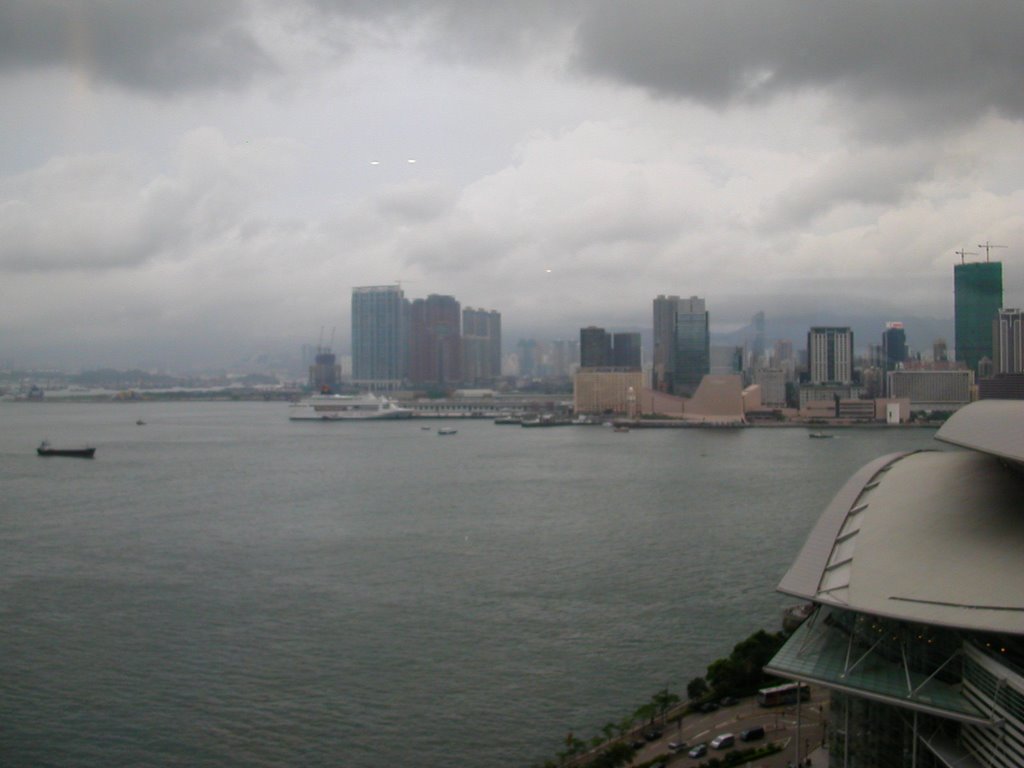
The Financial Times reports today that Hong Kong government officials are admitting that air pollution is hurting the city's economic prospects. (Earlier this month, Forbes Magazine and a few other newspapers noted that a number of hedge funds and smaller investment firms had already debarked for Singapore over air quality concerns.) The key quote comes from Victor fung, chairman of the government-backed Greater Pearl River Delta Business Council:
Up to a year ago [pollution] really hadn't hit our pocketbook. But now people are not coming to Hong Kong to take a job because their kid has asthma."
I find this interesting for several reasons. First, while it is clear that quality of life has a certain monetary value, it's unusual to observe environmental pollution, as a single component of quality of life, actually have a measurable effect on an economy. Usually, there are just too many other factors—employment, crime, schools, the number of economic activities and opportunities involved, geography, the weather—to be able to isolate air pollution as an economic harm. For example, São Paulo and Mexico City certainly may have pollution problems that effect economic growth. But they also have enormous kidnapping and murder problems, too. Blaming all of their development issues on environmental issues is problematic, to say the least.

Hong Kong may be special in this regard because (1) other factors (schools, crime, infrastructure, weather, even political freedom) are largely controlled for, at least vis-à-vis its chief competitor, Singapore; (2) it is small, so there is no escaping the air pollution problem by moving out to the 'burbs, and even a small effect on the local economy can be measured; and (3) it is first and foremost a financial center.

This last point is critical. While Hong Kong is also a shipping center and closely linked to Chinese manufacturing centers in Guangzhou, Hong Kong's wealth comes mostly from taking a cut of the vast sums of money that flow through the territory. When compared with banking, shipping and manufacturing are low-margin businesses. In today's world, finance is also the least geographically bound of industries. Stock exchanges are electronic, and buying and selling shares can be done at any time, day or night, anywhere. This means that financial firms can very easily pull up stakes and move to greener pastures (in this case, maybe literally). Hedge funds perhaps are the easiest to move, as they tend to be firms, with the least need for physical infrastructure. But now, it appears, larger firms are also following suit.

But while finance is particularly mobile, other industries—even old-fashioned bricks-and-mortar manufacturing—are also increasingly mobile. Even real estate and physical-capital intensive manufacturing industries now pick up stakes and move to cheaper or better locales, when profitable. For these industries, of course, "human capital" does not command nearly the premium it does with financial firms, but for some manufacturers and service firms, this may be changing.

What does this mean for the economics of environmentalism? Probably not much for those regions and countries with little in the way of human capital and otherwise dependent on manufacturing industries. But, in the United States, at least, cities now appear to be competing over attracting the "creative classes" and various "knowledge-based industries" as keys to urban development. Hong Kong's experience may provide ammunition to those arguing that a clean environment plays a role in a building a strong economy.