Friday, October 13, 2006

Regulating Creeps

Yesterday's Financial Times contained an op-ed by George Osborne, Britain's shadow chancellor of the exchequer,** on a topic near and dear to MDF's heart -- securities regulation creep (See "Preventing US regulatory creep"). Osborne takes a different position on creep than we do around here. Turns out that he's against it, at least when the US is doing the creeping. Anyway, I found this article interesting. And by interesting, I mean, not too terribly well thought out.

Osbourne's point is:

The question is crystallised by debate over Nasdaq’s interest in the London Stock Exchange. When I meet Nasdaq’s management in New York I will make clear that I have no problem with overseas ownership. I am not one of those opposition politicians who make a song and dance every time a British company is taken over. The openness of the British economy is one of its great strengths; to block foreign takeovers is to block foreign investment. Rather, the problem is fear of overseas regulation. If US regulation were applied to listing requirements, it would impose a burdensome, rules-based system on top of the lighter-touch, principles-based UK regime: US regulations could be applied to UK listed companies in the same way that the Securities and Exchange Commission tries to regulate UK hedge funds.

I welcome the fact that the British government has responded to calls from myself and others to act to protect London-based exchanges from the risk of regulatory creep.... How do we best regulate large international financial companies in a world where sovereign states have less independent influence? The current system is not working as well as it should. We have drifted to our current position without enough debate about how to tackle this challenge.

There are three potential approaches. The first is unilateral action: to build the best possible regime by improving domestic regulation and by taking the power to remove regulation imposed by others. That way we can set the level of regulation appropriate to the UK. The government’s proposed new powers on exchange regulation will accomplish that in their narrow sphere.

But action at home is only a partial solution. It can help to stop international regulatory creep from hitting all companies in the UK, domestic and international, but it fails to tackle the regulatory overlap for those wanting to operate in several jurisdictions. Worse still is the risk of tit-for-tat extra- territorial regulation. Some say that if, by opening a US operation, a company exposes itself to US regulation of the whole business, that is a cost of expansion. But I think we should be more ambitious in tackling this overlap.

The second approach would be to establish a supra-national institution that regulates at a regional or global level. But we know that this solution also has its flaws. Take the European Union. I want to see a single market in financial services, so that British companies can compete freely on the Continent. But sadly too many directives coming out of the Commission have been over-regulatory and bureaucratic, threatening London’s competitiveness. So I fear that taking a further step forward and creating a single European regulator would probably hamper our global position, not enhance it.

The third and best approach is for national bodies to work together. That will never be perfect, but the multilateral Basel accord shows how much can be achieved. We should promote the benefits of a principles-based system and lobby more strongly against future extra-territorial rules, whether from the EU or US. We should argue that the regulatory system sits at arm’s length from politicians and government. We should promote mutual recognition of standards instead of overlaying one regime on top of another.


I have no idea if regulatory creep exists or if it's a problem, but let's suppose it does and is. Well, why does it exist? Are regulations rewriting themselves? Are accounting regulations kind of like the creep in Starcraft, only scarier -- slowly expanding to cover the world in one thick layer of green eyeshades and 10-K forms until all shall know the true power of Sarbanes-Oxley? Probably not. Probably there's some person or group of people who have a desire to expand the scope and intensity of US regulation. If that group is the American public, then he's just plain silly. After all, cooperation is something that people do for their mutual benefit. If the US is imposing regulation as yet another way of taking over the world and extracting whatever it is that we want from the rest of the world (hey, that's entirely possible), then it hardly seems likely that we'd stop taking over the world just because the world asked nicely. (That kind of "talking over our differences" thing might work with pansy dictatorships like Saddam's Iraq or North Korea, but it doesn't work with us Americans.)

But what if it's not in the United States' interests either? That's probably what Osborne has in mind -- he says that "the current system is not working ... We have drifted to our current position without enough debate." Okay, sure. I'm going to go out on a limb and suggest that maybe most people don't know a lot about international securities regulation. I can't even be bothered to balance my checkbook -- there's no way that I'm going to know what is and what is not a good accounting rule or how much regulation is enough regulation. So maybe the story is that the SEC is trying to expand its power and influence and get a bigger budget by overregulating foreign markets, and since the issue is kind of boring (and about foreigners) most Americans don't follow it and so don't stop the SEC from doing what might not be in their interests. (Incidentally, ever notice how this issue is front page with the UK's Financial Times, and rarely, if ever, covered by the Wall Street Journal?) It's a basic principal-agent problem: the interests of Americans overall might not be the same as the interests of financial regulators.

Does this make the problem easier? Actually, it makes it much harder. If the SEC is nefarious, or corrupt, or just suffers from bad incentives that come from just being a bureaucracy, and this makes them overregulate foreigners, then it's not likely that they are going to cooperate with foreign regulators and stop doing that. If it's in their interests to overregulate, then it's not in their interests to cooperate in such a way as to stop overregulating. But if it's not in their interests to overregulate ... well, what is Osbourne worried about? If there is any regulatory creep, it seems to be entirely accidental.

What the other idea: creating a supra-national group to regulate the regulators? That, also, seems to be a bad idea--which Osbourne himself admits. If our financial regulation is inefficient or too burdensome or what-have-you because of a principal-agent problem and for reasons of rational ignorance, how can adding an even more distant, less accountable, and more bureaucratic group solve that problem? If voters are ignorant enough that we need an international group to protect us from a domestic group that's supposed to be working for us, how are we smart enough to know how to keep the international group in line?

But fundamentally, Osbourne really misses the entire nature of the problem (or, rather, he touches on it and dismisses it out of hand, as if securities regulation were just like regulating electrical socket safety). He implies that the United States is ready to export Sarbanes-Oxley "in the same way the Securities and Exchange Commission tries to regulated UK hedge funds." But this underscores the problem. The SEC hasn't tried to regulate UK hedge funds. It's tried to regulate hedge funds selling fund shares to U.S. investors. Some of these hedge funds just happen to have their headquarters in the UK because today's technology has rendered borders meaningless for many business operations. But regulation, of all sorts, is still a matter of national sovereignty--which is why this little hub-bub in the UK is so curious. The United States can't export Sarbanes-Oxley to other countries. But the SEC can apply it (and other regulations) on anyone operating within the United States. If NASDAQ were to buy the London Stock Exchange, there would be business pressure to harmonize NASDAQ's and the LSE's trading and listing rules, so that British investors could easily buy U.S. securities and American investors could buy LSE-listed securities. However, that can't happen under current SEC rules. By putting a regulatory hurdle in front of NASDAQ and the LSE merging their exchanges to combine London's international listings with America's enormous number of investors, UK politicians hope to make the LSE a much less attractive take-over target.


** "Shadow Chancellor" is just about the coolest job title since "Dark Lord of the Sith." Possibly cooler. Which is kind of fitting, because it's just about as interesting as the acting in the recent Star Wars movies. I mean, you get to be the guy who would be finance minister if only your party were in power? (But not the guy who gets to be finance minister if your party actually does come to power--that's someone else entirely.)

Thursday, October 12, 2006

UK MP Ed Balls submits "Balls Clause" amendment at British Bankers Association annual dinner

Yesterday, UK Economic Secretary Ed Balls spoke before the British Bankers Association, where he unveiled his proposal to give the UK Financial Services Authority the ability to veto any London Stock Exchange rule that is "inconsistent" with the UK's "light touch" regulatory philosophy. (The UK's touch is so light that it's financial regulator does not currently have the authority to veto a UK exchange rule.) As discussed here, here, and here, this bill is designed to keep the Sarbanes-Oxley Act out of the UK, should NASDAQ or the New York Stock Exchange buy the London Stock Exchange.

During his speech, Balls said:
At the same time as arguing for a sensible and light touch approach at the global and EU levels, we must also take what action is needed to protect our domestic regulatory approach. The Government’s interest in this area is specific and clear – to safeguard the light touch and proportionate regulatory regime that has made London a magnet for international business. That has made London an economic asset for the UK, for Europe, and for countries throughout the world. That is why I announced last month that the Government would legislate to enhance the FSA’s powers over recognised investment exchanges and recognised clearing houses, building on this regime. Tonight I want to explain in more detail what we have in mind in respect of legislative procedure and substance.

The bill he unveiled states:

In a statement on 13 September, I announced that the Government would legislate to enhance the FSA’s powers over recognised investment exchanges and recognised clearing houses. In that statement I promised further detail in due course. I am now able to provide details on how we intend to take this issue forward.

The Government has decided to introduce a stand alone bill to enhance the FSA’s powers in the next Parliamentary session. The short bill will seek to modify Part 18 of the Financial Services and Markets Act which deals with recognised investment exchanges and clearing houses. We intend to introduce the bill as early as possible in the new session, with a 2nd reading expected before Christmas.

Our aim is to enable the FSA to stop recognised investment exchanges and clearing houses making changes in their regulatory provisions whose effects are likely to be disproportionate. To this end we expect that the provisions will:

Cover all of our recognised investment exchanges and clearing houses, including the full range of markets operated by our recognised ivestment exchanges.

Enable the FSA to veto changes to regulatory provisions introduced by recognised exchanges and clearing houses or those applying for recognition that impose an obligation or burden.

Limit the circumstances in which the veto can be used to those where the relevant requirement is excessive, that is it is disproportionate to the end it seeks to achieve or does not pursue a reasonable regulatory objective.

Any exercise of the veto will be subject to appropriate processes. In particular:

Where the FSA decides to call in a regulatory provision to determine whether it is excessive, it will need to specify a period during which representations can be made to it about the provision.

If the FSA decide to veto the regulatory provisions called in that decision can be challenged by judicial review.

These provisions are not intended to put into question existing regulatory provisions of investment exchanges and clearing houses. They are not intended to involve the FSA in micromanaging the regulatory provisions of investment exchanges or clearing houses. And they are not intended to make overseas ownership of UK exchanges any easier or more difficult than it is at the moment.

The legislation is simply about providing a back-stop to ensure certainty for stakeholders about the proportionality of the regulatory provisions of investment exchanges and clearing houses. We will consult shortly, including with the investment exchanges and clearing houses and their stakeholders, about the detail of what we will be proposing.

Wednesday, October 11, 2006

Congress giveth and Congress taketh away (Part 1): The SEC and credit rating agency legislation

Two laws recently have been passed by Congress and signed by President Bush that will have a big impact on the regulation of U.S. financial markets. Neither of these laws have received much press, and I suspect that most Congressmen didn't even know what they were voting on when they agreed to them. They don't directly touch on issuers or investors, so, unlike Sarbanes-Oxley, they are pretty much under the radar screen. But they both will have a profound impact on what the Securities and Exchange Commission's Division of Market Regulation does.

The first of these new laws is the Credit Rating Agency Reform Act. (The second will be discussed in a different post.) This is an interesting law with a very convoluted history that some day will make a good study for public choice theorists.

The story basically goes like this: The SEC requires investment banks and broker-dealers and other people who hold your money on your behalf to keep some of that money in reserve to cover losses that the company might experience as a result of operational failures, employee theft and the like. (The risk you face as a result of your bad investment is your own problem, but the idea is that you should be protected from losses that happen if somebody at the company types in the decimal point in the wrong place after you place an order.) Since 1975, the SEC has said that if the investment company keeps some of its money in particularly safe and liquid assets (i.e., investments that most likely aren't going to lose much value tomorrow and can be sold on a moment's notice), then the reserves don't have to be so big. But how do you know if an asset is safe and liquid? Well, one way is to look at the asset's credit rating. If a rating agency says U.S. government bonds are "Triple-A" (in other words, short of a nuclear holocaust, the U.S. government is going to pay you back, particularly since it can print the money to do so), then an investment company holding a lot of those bonds doesn't have to set aside as much cash as would a company investing in "junk" (very risky) bonds or equities.

But which rating agencies are acceptable? Some (such as Moody's, Standard and Poors, Fitch, etc.) are famous and respected. The one I just started in my basement where I assign credit ratings based on the shape of chicken entrails is somewhat less so. So, as part of this 1975 SEC "Net Capital Rule," the SEC said that if the credit rating agency is "nationally recognized," its ratings could be used in determining reserve requirements. So, how do you know if a rating agency is nationally recognized? Up until now, if you were an investment firm, you sent a letter to the SEC asking if they would take an enforcement action against you if you relied on XYZ Ratings, and, after some time (maybe a long time) and after deliberating deep within the SEC's offices, they just might send you a "No Action" letter saying they won't go after you if you do. Or they might not. And, if some rating agencies are to be believed, the SEC rarely tells you why they make the decisions they do, or what they are looking for. As for the SEC, they say they merely poll "the market" to see how widely a given rating agency's ratings are used.

It is an opaque system. Worse, it's arguably anti-competitive. Since 1975, the SEC and a number of other government agencies (and foreign governments) have piggy-backed on this "NRSRO" (Nationally Recognized Statistical Ratings Organization) system for banking, mutual fund and insurance regulation. Even private companies use the SEC's NRSRO status in their own contracts, under the theory that if a rating is good enough for the SEC, it's good enough for them. In the late 1970s, there were 7 NRSROs, but by 2000, mergers had cut this number down to 3. Since then, and under pressure, the SEC has increased this number to 5 (adding the Toronto-based Dominion Bond Rating Service and A.M. Best to Moody's, Fitch and S&P).

This situation has annoyed issuers and smaller rating agencies. Issuers pay NRSROs to rate them, because the NRSROs have figured out that information about their ratings spread so quickly that they face a collective action problem with fees. Nobody (with the exception of Bloomberg and other news services) will pay for their ratings, since they can get it free through the gossip mill. So, instead, the big rating agencies charge issuers for a rating, much like your bank charges you to run your credit score for a car loan. Further, issuers have to pay for more than just one rating, since investors want a second--or third--opinion before parting with their money. Making it worse, they don't want a rating from just anybody. If you don't go with an NRSRO, the investors will just assume you paid me off to rig the chicken entrails in such a way to get you a good rating. (And they'd be right.) So issuers are facing an oligopoly, and new entrants are closed out of the market.

But while issuers have been peeved, in the grand scheme of things NRSRO ratings, while overpriced, are not nearly as overpriced as are underwriting fees. (If you have a $100 million bond offering, you really don't care if S&P sends you a bill for $75,000--particularly since your investment banker's bill will probably be $6-7 million.) At the same time, new entrants to the ratings market tend to be small and politically weak. Consequently, there really wasn't much political momentum for change. That is, until Enron. Enron raised investor hackles because all of the major rating agencies missed the boat and failed to predict the company's collapse until just beforehand. (In their defense, of course, it should be noted that the immediate reason for Enron's collapse actually was a ratings downgrade, since Enron had a number of large loans that came due immediately upon Enron's debt being downgraded to junk status. Nonetheless, Moody's, S&P and the rest seem to have taken at face value whatever Enron was feeding them beforehand.) This event changed the politics of NRSRO recognition and put pressure on the SEC to regulate the industry and open the doors to competition.

In early 2005, after unsuccessfully petitioning the SEC to grant his little operation NRSRO status, Sean Egan, the owner of Egan Jones Ratings Co., asked his congressman, Michael G. Fitzpatrick (R-Penn.) to introduce legislation that would basically take from the SEC the authority to determine which rating agencies could be NRSROs. The resulting legislation, which passed the House this past summer, was called the Credit Rating Agency Duopoly Relief Act ("duopoly" referring to the 70+ percent market share of Moody's and S&P.) House Republicans strongly supported the bill, not so much because they thought that the ratings industry needed more competition, but because certain House staffers instinctively distrust the SEC and Fitzpatrick is a first-term congressman facing a tough reelection battle. Legislation bearing his name might lend him some campaign ammunition (though why his Pennsylvania constituents would care about ratings agency legislation is beyond me). The House bill would have prohibited any rating agency from issuing ratings in the United States unless it was first registered with the SEC, and would have mandated that the SEC would permit registration of any rating agency that had three or more years experience and no obvious conflicts of interest. (How this mechanism would actually promote competition is also beyond me, since you couldn't do business if you weren't registered, and you couldn't register if you hadn't been doing business for at least three years. But, of course, Egan Jones had been doing business for more than three years, so who cares, right?)

This bill passed the House by a wide margin. But a funny thing happened on the way to the Senate. The Senate's version of the bill, which was only drawn up after the House bill had passed, largely paralleled the House version but for a few, very important, changes. In particular, rather than mandating that the SEC permit any rating agency to register as an NRSRO, the Senate version said the SEC should designate any rating agency an NRSRO provided the rating agency submitted certifications from at least 10 financial firms stating that they actually rely on the agency's ratings. The SEC is also given the power to set other rules to determine who qualifies as an NRSRO, and any registered NRSRO is subject to SEC rules and oversight. (Prior to this law, there were questions about whether the SEC had the legislative authority to regulate the NRSROs--see, for example, former SEC Chairman William Donaldson's speech here). This Senate bill passed and the House agreed to the Senate version without hammering out any differences in conference. President Bush signed the bill into law on Sept. 29.

So, what does this all mean? It means that that while the SEC has been forced to clarify how it designates certain rating agencies as "nationally recognized," the SEC also has considerable new powers to regulate them. At the same time, Congressman Fitzpatrick and his constituent, Sean Egan, seem to have lost control over the truck they set in motion. Rather than opening the NRSRO designation to everyone, the Credit Rating Agency Reform Act actually tightens who can qualify as an NRSRO and gives the SEC broad new regulatory powers. Not exactly what Mr. Egan wanted, I suspect.

This new law likely will have two broad results. The first is that it may actually increase the number of NRSROs. Most of these new NRSROs, however, probably will not be small firms like Egan Jones, but foreign companies like JCR or R&I. A second result may be a new raft of "me-too" foreign legislation, particularly in Europe. The entire issue of credit rating agencies is more political in Europe than in the United States, with European issuers often complaining that the big "Anglo-American" ratings agencies don't understand how business is conducted on the Continent, and hence give them too low ratings because of under-funded pensions and the like. A new set of European laws on rating agencies likely will be more protectionist and focus on "issuer rights" rather than actual ratings quality. This could have a detrimental impact on the cost of capital on European markets.

Monday, October 09, 2006

YouTube: Why am I not a billionaire?

Since hi-tech billionaire Mark Cuban said you'd have to be a moron to invest in YouTube (see here), and I said Cuban is wrong and that any intellectual property concerns YouTube may raise will be easily dealt with (see here), and Google just announced that it intends to buy YouTube for $1.65 billion (see here), and Google also announced that it has arranged agreements with two record companies and CBS to share royalties for any copyrighted material (see here), and Google's stock price has jumped 2 percent on the news, only one question remains: why am I not a billionaire?

Mexico may protest fence at United Nations

Jenny Barchfield of the Washington Post reports that Mexico's outgoing foreign ministry is considering bringing the issue of the proposed 700 mile U.S. border fence to the U.N. (See Mexico May Take Fence Dispute to U.N.)

In a way, this threat is heartening. It shows that stupid politicians aren't unique to the United States. First, these guys are outgoing. There's going to be a new administration in Mexico, and the president-elect Felipe Calderon has already said that this is a bilateral issue to be resolved by Mexico and the United States. Second, there is no legal case. Provided a border fence doesn't interfere with international trade (which is covered by various treaties -- none of which, I believe, would actually fall under the U.N.'s jurisdiction), there are no international agreements or customary international law that says a country can't build fences, moats, or whatever within their own countries and along their own borders. (However, if you fill the moat with crocodiles, you may actually violate international law. Since crocodiles are endangered, I'm guessing there might be a problem with the Convention on the International Trade of Endangered Species. Same goes for sharks with laser beams strapped to their heads.)

Also, I'm heartened to see the Mexican Foreign Secretary Luis Ernesto Derbez plans to raise the fence and immigration issue with his Spanish and Italian counterparts this week. Seeing that neither Spain nor Italy have illegal immigration problems of any sort, I'm sure Derbez will have a receptive ear.

Bloomberg says Paulson in drive to reform U.S. financial Regulations

Robert Schmidt of Bloomberg is reporting that Treasury Secretary Hank Paulson is leading a drive pushed by the business community to roll back the Sarbanes-Oxley Act ("Paulson Leads Drive to Ease Regulations of Sarbanes-Oxley Law").

Schmidt's article does a good job explaining Paulson's views and the pressure the Treasury Secretary would like to mount in a campaign to repeal Sarbanes-Oxley, but only touches on how limited Paulson's ability to maneuver is in this area. It also fails to mention that Paulson's objectives do not seem to be limited to just SOX but all U.S. financial regulation. This has several important implications.

First, while Paulson is indeed the most powerful Secretary of Treasury that the Bush Administration has had, the Treasury Department is still comparatively weak vis-a-vis the power the agency wielded during the Clinton years. Unlike many countries, the Securities and Exchange Commission (the country's securities market regulator) does not report to the Treasury Department (or, for that matter, to the president directly). With the exception of the Office of Comptroller of the Currency (OCC) , nor do the nation's banking or insurance regulators. With banks, the big daddy regulator is the Federal Reserve, with OCC and the Federal Deposit Insurance Corporation (FDIC) playing second fiddle. Insurance regulation in the United States is conducted at the state level.

What this means is that the Treasury Department, while it represents the United States at such international organizations as the Financial Stability Forum, the Organization for Economic Cooperation and Development and the Financial Action Task Force, really isn't the boss of anyone important. It collects taxes, protects the president, and heads the Financial Crimes Enforcement Network, but really doesn't set regulatory policy in any area except for taxation. So Paulson can use the weight of his (diminished) office to try to push through regulatory changes, but he's in a poor position to do it by himself.

The one thing that he can do, and which he apparently is considering, is streamlining banking regulation by moving the OCC under the Federal Reserve's authority. The OCC has been blamed by some for the mess that now is the Basel II Accord, which the Federal Reserve has since said applies only to large U.S. banks with international operations, and not small U.S. banks (a position that has caused some consernation among European financial regulators, who see this as giving smaller U.S. banks a competitive advantage). If Paulson does move the OCC under Federal Reserve authority, it will simplify U.S. banking regulation. But U.S. banking regulation isn't what has the U.S. Chamber of Commerce and its Committee on Capital Markets Regulation with their underwear in a wedgie.

In the end, however, Paulson may be able to claim victory for events underway before he took office. As I noted previously, the Public Company Accounting Oversight Board is in the process of drafting a new Audit Standard 5, which will take much of the pain out of Section 404 of the Sarbanes-Oxley Act. This new AS5 may well be out by December. That, combined with new SEC deregistration rules (which likely will be released at or before the new AS5 is) will make it difficult for foreign issuers to complain about the costs of Sarbanes-Oxley. The costs of implementing Section 404 (the provision on internal controls) will drop, and, if you don't like it, it will also be much easier to get out of the American market.

This will not solve the Sarbanes-Oxley issue for many foreign (and domestic) issuers. The PCAOB will still be policing audit firms, which will make it harder for companies to reward or punish auditors who don't go along with their interpretation of U.S. Generally Accepted Accounting Standards (US GAAP). CEOs and CFOs will still need to certify the accuracy of their companies' financial statements -- which, while not costly, is something CEOs and CFOs would rather not do, since it more clearly puts their butts on the line if someone is lying. And companies will still need to give a statement about the quality of their internal control systems. What will be different is that the steps the audit firm will use to check on the validity of this statement will be far less rigorous and costly.

Public companies will still complain about this last point, but the strength of these complaints will be far weaker. Right now, a company legally can announce (truthfully) that its internal control are weak and that it has no idea about how its money gets spent. And they will still be able to do this after implementation of Section 404 is "improved" (i.e., AS5). The problem with this, of course, is that no sane investor will pay much for the securities of a company making such an announcement, and companies know this. Hence, some issuers will continue to complain about the internal controls provision, arguing that it still requires them to adopt expensive new internal controls or else face a dramatic drop in stock price. But, frankly, that's a little like a used car dealer complaining that a law that mandates used cars be sold with accident and repair reports will lead to car buyers paying less for damaged cars. In other words, an argument that's a little harder to feel sympathy for.

Saturday, October 07, 2006

PCAOB’s Niemeier defends Sarbanes-Oxley as Audit Standard 2 is reconsidered

Last week, Public Company Accounting Oversight Board member Charles D. Niemeier spoke at The Atlantic’s “Ideas Tour,” which has been billed as a convention of “great thinkers and prominent members of the public for live dialogue, debate, and discussion around the celebration of ideas.” Niemeier spoke on “American Competitiveness in International Capital Markets.”

Niemeier’s remarks come just as the PCAOB is in the middle of a complete revision of Audit Standard 2 (which, rumor has it, will be renamed Audit Standard 5). AS2 is the PCAOB’s rule that specifies how independent audit firms should audit a public company’s internal controls as part of the dreaded Section 404 of the Sarbanes-Oxley Act. Its detailed specifications have permitted audit firms (who were burned so badly following Enron that one of their largest, Arthur Andersen, collapsed) to force issuers to pay large sums to ensure that their internal controls are strong enough that another Enron or Worldcom doesn’t happen again. However, critics accuse AS2 of focusing on such picayune matters that the costs involved do not justify the additional safety to investors. (In reality, when companies complain about Sarbanes-Oxley, they mean Section 404. The costs created by the rest of the act are minor.)

Niemeier’s speech offers a defense of high U.S. regulatory standards and against the charge that the Sarbanes-Oxley Act is driving foreign issuers away from the U.S. market. In doing this, he makes several interesting points:
  1. Individual investors enhacne the competitiveness of companies listed in the United States by offering low-cost, long-run funding at a level unparalleled in any other country. These investors are able to do this because of the degree of investor protection found in the U.S. market. Niemeier cites data showing that the cost of capital for foreign firms cross-listed on their home markets and in the U.S. is significantly lower (from 7 percent lower for Japanese companies, to 25 percent lower for Egyptian firms).
  2. Not every company wants to pay the price that comes with this low-cost capital. In particular, companies with powerful insider may not wish to list in the U.S. becuase their abilities to extract private benefits from the companies they control are limited in the United States because of U.S. laws protecting minority shareholders.
  3. Over time, as more and more foreign markets adopt stronger securities regulations and shareholder protection laws, these markets also become attractive places to invest. U.S. markets now face more competition because of this.
  4. The decline in the U.S. share of world IPOs long predates Sarbanes-Oxley and is likely related to other polistical and economic factors. Niemeier cites data showing that the U.S. portion of world IPOs has been decreasing since 1996, and has actually recently seen a 15 percent uptick. Part of this is due to low interest rates around the world, which has made private equity and leveraged finance firms more attractive vis-a-vis equity issuances. In addition (and as I have noted here), a large number of recent IPOs by privatized state-owned enterprises (particularly in France and China) has boosted foreign markets, notwithstanding the significant valuation premium the IPOs might have gotten had they listed in New York. (SEC Chairman Cox made a similar observation in a speech he made in China just prior to the China Construction Bank IPO in Hong Kong.)
  5. Niemeier notes that the number of U.S. companies having IPOs has dropped dramatically since the collapse of the dot.com bubble. He also takes a swipe at the UK, noting that the London Stock Exchange's Alternative Investment Market (AIM), which advertizes itself as a low-regulation market for new companies, is really looked at more as an alternative to private financing than having an IPO on the U.S. market.
  6. Niemeier also states that he expects changes to SEC and PCAOB rules to help address the costs associated with Section 404.
Niemeier's remarks, complete with charts and data, are a direct response to criticism of Sarbanes-Oxley, from both abroad, and from domestic groups such as the Committee on Capital Markets Regulation. (It's just too bad the PCAOB likes to bury these speeches so deep in its website.) Interestingly, the proposed changes to AS2 are barely referenced, which may indicate Niemeier is not yet completely on board with the extent of the proposed changes. (It is also possible that the PCAOB hasn't completely agreed on the extent of the changes itself, but given the pressure the PCAOB is facing from both Congress and the SEC, anything less than a drastic change seems unlikely.)

Wednesday, October 04, 2006

I'll have the Pelagic Krabby Patties, please

It's reassuring to see that Sen. Olympia Snowe (R-Maine) is standing up for her constituents by demanding that the Food and Drug Administration forbid purveyors of South American langostinos from calling them "langostino lobsters." (See article here.) I'm just not so sure about that claim that langostino sales are costing Maine lobster fishermen $44 million per year. I mean, had I known that Long John Silver's "Buttered Lobster Bites" were made of Chilean mudbugs and not authentic Maine lobster, I would have stormed right out of there. Sure, the $3.99 price tag on the "Buttered Lobster Bites" might have tipped me off, since a bag of fried lobster meat somewhere else costs $25 -- plus, I'd have to sucker-punch the chef first, since he'd otherwise come at me with a fileting knife for wanting to deep-fry real lobster.

But $44 million? Would all those other langostino purchasers otherwise have gone out and bought a real Maine lobster?

Tuesday, October 03, 2006

Warning: Falling out of a bunk bed will not win you $179,001!

What I don't get is, why did it take an appeal to the New Jersey appellate court to decide that the makers of a loft bed were not negligent in failing to warn a 19-year old that if you fall six feet out of the top bunk, you might get hurt?

But, that's only one question. More important questions are, who was this lower court judge? Who was the jury? And, most importantly of all, can I be a New Jersey judge? Because apparently any idiot can be on the NJ bench, and I'm any idiot.

The best part is of the opinion is:

Plaintiff resumed sleeping in the loft bed, but subsequently positioned himself "all the way against the wall," as far as possible from the open edge of the bed, because he "didn't want to fall off the bed again." There were no warning labels on the bed, and it had never "cross[ed his] mind" or "occurred to" plaintiff that he could fall or that the bed was dangerous in any way. He testified that had he seen a warning, he would have been "aware of the hazard that was present" and slept closer to the wall, as he had done after the accident.
Does this mean that "you get nothing because you're stupid" is now precedent?

Monday, October 02, 2006

What’s wrong with cutting and running

As this Congressional campaign season has heated up, the term “cutting and running” increasingly has been applied in one fashion or another to the Iraq war. Typically, it is used by Republicans to claim that that is what Democrats want, and by Democrats to deny the charge (See, for example, this GOP link, which attempts to link Rep. John Murtha (D-PA) with “cutting and running” on practically everything.) While the term is itself derogatory (after all, few will admit they are in favor of “cutting and running,” even those in favor of a unilateral and immediate withdrawal from Iraq), all derogatory terms need a little parsing. Without parsing, we condemn our political debates to vocabulary contests, with our choices determined by which side manages to think up the most pleasant- or horrible-sounding euphemism for the question at hand.

For the purposes of this post, I’ll define cutting and running as withdrawing US troops from Iraq under Vietnam-like conditions — in other words, under conditions where it’s pretty clear we haven’t won. In reality, I think there are other “cutting and running” scenarios that don’t necessarily entail a complete withdrawal of US troops, but we’ll get into that later. So, what issues does cutting and running involve? This is an important issue because, regardless of what you think about the initial decision to invade Iraq, whether intelligence about Iraqi WMDs were exaggerated or even fabricated, whether Iraq is central to the War on Terror or just an unnecessary sideshow, it seems pretty clear (to me, at least) that the White House did not have a “Plan B” in place for Iraq if the occupation of the country ran into trouble. This is both surprising and not surprising. It’s surprising because many of the insurgency problems we are now facing in Iraq are precisely those that led George H.W. Bush to not invade and occupy the country during the first Gulf War. It is not surprising because quite a few major military plans of the past — from the Athenians at Salamis to the German Schlieffen Plan — have failed to have an effective backup in case things don’t work out.

At this point, of course, it’s not just the Republicans who seem to not have a Plan B. Recently, Ned Lamont, who is advocating pretty much as close to a cut and run idea as is out there, admitted that he doesn’t really have a clear idea of what the likely outcome for the Middle East would be if the U.S. pulled out of Iraq (“I think we now have a lot of lousy choices,” was his response.)

Staying the course

“Stay the course,” as has been the Bush Administration’s line until recently. (This has recently been changed to “adapt to win” — which, frankly, I find a little disconcerting, since if it has taken the White House three years to figure out Helmuth von Moltke’s maxim that no plan survives the first five minutes of encounter with the enemy, then the Bush Administration rapidity in adapting environmental change puts in on par with the Giant Panda.) That said, staying the course is, effectively, a strategy of attrition. It is predicated on the idea that we can sustain our losses for longer than the Iraqi/Jihadist insurgents can sustain theirs. This is, to put it very gently, a highly risky strategy. This week’s leaked release of a National Intelligence Estimate on global terrorism trends claims that the war in Iraq is not going well, galvanizing the Jihadist movement in such a way that the Iraqi insurgency shows no sign of weakening, despite continued US military pressure.

Ironically, little that has been publicly disclosed about this leaked top secret reports says much that everyone doesn’t already know. The continued strength of the Iraqi insurgency is hardly surprising, given that it is not just Iraqis who want to see the insurgency continue. It is also pretty much everyone else in the region as well, and perhaps even beyond the Middle East. So long as the United States is involved in Iraq, it has far less capability and willingness to become involved in other global hotspots. Consequently, we can expect that even the Chinese, North Koreans and Russians have a desire to see the Iraqi insurgency survive, and we can expect that the Syrians and Iranians, at a minimum, will provide assistance to the insurgents.

Foreign incentives also underscore the difficulties the United States faces in building an Iraqi political consensus that might lead to peace. The Syrians, Iranians, and even the Turks have a strong motivation to stir the pot. The Syrians have no desire to see a strong Iraq, since Iraq has traditionally been at odds with Syria and a competitor for power within the Arab world; a conflict-torn Iraq greatly strengthens Iran’s position in the region; and Turkey can be expected to oppose anything that furthers Kurdish autonomy. By contrast, a peaceful Iraq (and a strengthened America resulting from such peace) is a grave threat to both Syria and Iran. Other regional players also have their own incentives to undermine any internal Iraqi political solution. Much of the Sunni Arab world — including Saudi Arabia and even Jordan — has no desire to see Iraq become a client state of Iran, which is what they see happening if Iraq’s Shi’ites dominate the country. Given Iraq’s long and porous borders, this means that the Iraqi insurgency likely will not lack for weapons, ammunition, logistical support, or even foreign volunteers.

It also means that Iraq’s various political parties, impoverished and threatened by partisan violence as they are, are vulnerable to outside political influence. Iraq’s Sunni minority instigated this fight, but will come under increasing pressure from as Shi’ite Iraqi death squads seek retaliation. The money, weapons and protection covertly offered these Sunni groups by Syria, Saudi Arabia and other Arab states will come with a price, and we can expect that price to include continued violent opposition to the American military presence. Iran, who is offering similar support to Shi’ite groups (and, rumor has it, Sunni groups as well), can be expected to encourage Iraqi Shi’ites to insist on nothing less than total political domination of the country. This is not an environment conducive to an American attrition strategy.

Plan B?

In the world of Plan B’s, retreat is always an option (and sometimes the only option). But what would a complete American withdrawal (or a “timetable”, as it’s sometimes called) entail?

If the United States were to unilaterally withdraw from Iraq under current conditions, we can expect several possible outcomes. Full-fledged civil war in Iraq clearly is the most obvious. The current situation in Iraq is a civil war, but without American involvement, the intensity of the Sunni-Shi’ite conflict would increase geometrically. The massacres of dozens and hundreds that now occur in Iraq would soon involve thousands. Rather than car bombs, we can expect that the Sunni and Shi’ite sides would graduate to artillery and rocket attacks on entire neighborhoods. Without American soldiers able to dominate any overt military activity, neither side would feel obligated to rely on furtive terrorist suicide and remote car bomb attacks — and, indeed, such attacks would be more difficult, since, without an American presence stopping them, both sides (as well as the Kurds) can be expected to engage in a degree of “ethnic cleansing” of neighborhoods, to ensure that car bombs and similar terrorist attacks are harder to perpetrate. Civilian Iraqi casualties from such a civil war will run in the tens of thousands, and perhaps even the hundreds of thousands before the course of the conflict has run.

While it is possible that the warring factions in Iraq will see the danger that faces them as the US withdraws (and this withdrawal might therefore force them to the negotiating table), this scenario seems less likely because outside forces will push for war. Iraq’s neighbors will not silently watch this drama unfold. Sunni/Wahhabi jihadists (many of them foreign) will continue a terror campaign against Iraq’s Shi’ite communities in order to forestall a Shi’ite-dominated Iraq. Iran, by contrast, will see an Iraqi civil war (and the absence of American troops) as their single greatest opportunity to dominate the region, and they will lend their full support behind the Shi’ite Iraqi side. Iraq has been Iran’s most significant regional enemy, even before the Iran-Iraq War of the 1980s, and even though the majority of Iraq’s citizens are members of the same Muslim denomination as the Iranians (Shia’ism), the ethnic divide should not be underestimated. Iran will prefer to see a unified Iraq under Iranian control, but they will prefer to see a divided Iraq over a unified, but independent country. We can also expect that the Sunni Arab states will recognize this Iranian opportunity for what it is, and will use their wealth and military resources to help ensure that Iran does not achieve its goal — even if that means supporting jihadists. At a minimum, this will mean that, absent US troops, a full-scale Iraqi civil war will be very difficult to avert, and likely will be extremely bloody. In a worst-case scenario, an Iraqi civil war could spark an all-out war between Iran and the Sunni Arab states of Saudi Arabia, Kuwait, Jordan, Syria and even Egypt.

Plan B.1

An alternative to a complete withdrawal of US forces with be a substantial withdrawal, but with a sizable remainder of US troops based inside of Iraq at relatively inaccessible desert bases, or in Iraqi Kurdistan. Such a partial withdrawal could reduce the American footprint within Iraq and make US troops less of a target to insurgents. To be effective at limiting US casualties, of course, the American footprint would have to be reduced to the point that US troops could not prevent a full-scale Iraqi civil war, and the attending massacres and ethnic cleansing. Their presence, however, would be sufficient to deter direct outside intervention, such as an invasion by Iran (or, for that matter, Turkey). Clearly, however, this presence would not be sufficient to prevent indirect outside intervention, such as weapons transfers and logistical support to the Iraqi combatants.

Consequences for the United States

Clearly, either a complete or a partial withdrawal of US troops from Iraq will have strategic consequences for the United States. Some of these may be good, while others likely will be deeply problematic.

US credibility

Opponents of a withdrawal frequently point out the downside. The first is the damage to US credibility. Under this view, “cutting and running” will embolden America’s enemies and dishearten America’s allies. The United States will be viewed as weak and unwilling to use force, with adverse effects on America’s ability to deter other countries from engaging in military adventures that run against US interests. China may question US resolve to protect Taiwan, North Korea may be encouraged to provoke South Korea and Japan, and Iran may be less willing to negotiate away its nuclear ambitions.

Critics of this view will point out that deterrence and credibility are better achieved through actual, projectable power than through empty displays of “intestinal fortitude.” (See, for example, Lt. Gen. William E. Odom’s article, “Cut and Run? You Bet” in Foreign Policy.) Removing US troops from Iraq will increase the United States’ ability to project force in other regions of the world. (Counter-critics of this view will point out that deterring China and North Korea is primarily the job of the US Navy and Air Force, neither of which currently are greatly burdened by Iraq.) Nonetheless, basing deterrence and credibility entirely on ability and ignoring the psychological aspects seems to ignore history. For example, while Odom writes that “…[t]he same argument was made against withdrawal from Vietnam. It was proved wrong then and it would be proved wrong today,” he ignores that many other countries — particularly Iraq in 1990 and Iran in 1979 — did indeed draw from the Vietnam experience the idea that the United States was unwilling to commit itself to a war. It was not until the first Gulf War that US credibility, in that regard, was fully restored.

However, this points to another problem. The credibility and deterrence that the US built up after the first Gulf War (and, again, in Kosovo and immediately after the invasion of Iraq) arguably has dissipated as a result of the current conflict. The idea that the United States can be beaten through “asymmetric warfare” has gained considerable credence, particularly with Iran and China. Consequently, there may not be much credibility left for the United States to lose in a withdrawal from Iraq.

International opinion and influence

Even if much of the world currently condemns the US invasion of Iraq, we can fully expect that international condemnation will increase if the United States was to withdraw and a full-scale civil war erupted. Colin Powell’s words that “if you break it, you buy it” will be read on the editorial pages of newspapers around the world, and the US will be blamed for any massacres or ethnic cleansings. This charge will ring even more strongly if the US withdrawal is only partial and American troops are still located nearby. Indeed, the pressure to redeploy these forces to stop any massacres may be enormous.

Blowback

If the United States disengages from Iraq and a full-scale civil war erupts, there is a risk this will expand beyond Iraq’s borders. On one hand, this may actually increase US influence in the region, as some Sunni Arab governments seek US help in fending off Iran’s power. On the other hand, this may further radicalize some Sunni Arabs. Even as Arabs throughout the Middle East celebrate in the streets over a great “victory” against the United States, it will only be a short time before conspiracy theorists spring up claiming that a dramatic US withdrawal is part of a diabolical plan to pit Muslims against Muslims and divide up the region. Any support the United States offers its traditional regional allies (Jordan, Saudi Arabia, Kuwait, Egypt) will be seen as confirmation of this plot.

This, in turn, may have a serious effect on the war against terrorism if it further radicalizes Sunni Arabs, in both the Middle East and the rest of the world. This seems particularly likely if Iran’s agenda in Iraq proves successful. Iran is a powerful, unified country, with a potent military force vis-à-vis most Sunni Arab states. Absent direct US involvement, it is quite possible that Iran will succeed in either tipping the balance within Iraq in favor of Shi’ite dominance, or else fueling a civil war so severe that Iraq is split into three parts. While Iraq’s Shi’ite Arabs (particularly those closely allied with Grand Ayatollah al-Sistani) likely will oppose Iranian meddling, it is also quite possible that they will be so weakened by war (and divided internally) that they have no choice but to follow the Iranian agenda. If this happens — if Iran “Finlandizes” Iraq — Sunni jihadists will look for a scapegoat. The first scapegoat will be the existing governments in Sunni Arab countries, and the second will be the United States and Europe.

Options

Ned Lamont is right that the United States now has a lot of lousy choices. The problem is that there currently are too many “known unknowns” (to use a Donald Rumseld phrase) for good decision-making to be possible. “Staying the course” is a known known, and a bad one at that. However, the alternatives may be worse. Politically, it is hard for the Bush Administration (or any subsequent Administration, Republican or Democrat) to devote the military resources to Iraq and the Middle East that could force a solution favorable to the United States. There simply are no more soldiers to put on the ground, and a military draft is not an option. At the same time, a complete military withdrawal could easily lead to Iranian domination of the entire Persian Gulf, or possibly even spark a regional war between Iran and various Sunni Arab states. Either situation would be extremely harmful to American interests in the region.

A partial withdrawal of US troops — if feasible (i.e., militarily defensible) — could prevent direct Iranian involvement in Iraq, but it is unlikely to keep Iraq from erupting into a civil war with tens or hundreds of thousands of civilian casualties. Conceivably, the United States could broker a peace by playing the role of “king-maker” (by deploying troops from isolated bases in support of one side or another). However, this may be politically difficult, since it would require that the US support a side that inevitably engages in atrocities. It may also be militarily difficult, if Iran and Syria provide advanced military equipment to the Iraqi combatants.

Lousy choices? No kidding, Ned.

Friday, September 29, 2006

Big Government Republicans and Internet Gambling


Internet gambling is not an issue I particularly care about (I have less of a "gambling problem" than a "parting-with-my-money problem"). Nonetheless, assuming there are basic protections in place to keep out the kids and the mob, I don't see why the government should particularly care about it either. More importantly, if you proclaim you are the party of small government, I really don't understand why you would go out of your way to put a federal ban on Internet gambling into a port security bill, like Senator Bill Frist (R-Tenn.) has done.

Where's the small government? Where's the states' rights? Where's the "freedom" and "liberty" part of the Republican Party today?

Barry Goldwater must be spinning in his grave.

What to do with YouTube

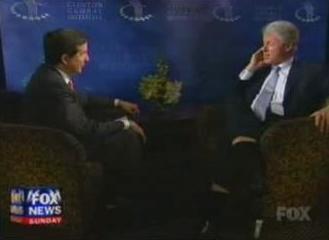
I’m a big fan of YouTube, if for no other reason than that I’m not really up on things generally and it is useful to me when friends send me emails saying, “I know you live with a family of raccoons in the woods, so you might not have seen this when it ran on TV, but I think you might enjoy it.” (Fortunately, my raccoon family has high-speed Internet access.) Also, without YouTube, I couldn’t post interesting things on this blog, such as “Bill Clinton gets mad and Chris Wallace smirks”, “Now that’s the Ann Coulter we know and love!”, “The funniest thing I've seen this week”, “More on Ann Coulter and something on Henry Rollins” or “Ann Coulter is a deconstructionist”. (Ok, I’ve got an unhealthy fascination with Ann Coulter…). I would also include “Joe Biden should stay out of Dunkin Donuts”, but the National Journal was kind enough to put that link up on its own website.

My point, and the point made by Mark Cuban on Blog Maverick and the Wall Street Journal's Law Blog, is that most of this material is pirated. In other words, it is copyrighted material that somebody (not me) posted to YouTube without the copyright owner's permission. Cuban is predicting that YouTube will go the way of Napster, in that it is making money off of this pirated material and it is only a matter of time before the powerful copyright owners shut it down.
The thing is the shock that until Universal Music Group apparently started to put the pressure on them, no one had sued them. Considering the RIAA will sue your grandma or a 12 year old at the drop of a hat, the fact that Youtube is building a traffic juggernaut around copyrighted audio and video without being sued is like.... well Napster at the beginning as the labels were trying to figure out what it meant to them. With the MGM vs Grokster ruling, its just a question of when Youtube will be hit with a charge of inducing millions of people to break copyright laws , not if.

I disagree, and the reason is that YouTube operates under a very different technological environment and, most significantly, because Cuban misses what video content providers are selling.

Technologically, of course, there is a big difference between an MP3 music file and a video file. Downloading music files is quick and the storage capacity of even a cheap computer today (an even a basic MP3 player) means that downloading and uploading entire albums is easy and the quality of the final product is good. The result has been a dramatic decrease in album sales — to the point where recording companies have begun to lose millions (if not billions) in revenue.

Video files, of course, are massive and current Internet technology means that downloading entire pirated episodes of television shows (let alone movies) is prohibitive. Storing such downloaded files is also problematic. Quality is also an issue. While few ears can tell the difference between a higher-quality MP3 version of a Metallica tune from it's CD counterpart, anyone can see that a matchbox-sized .wmv-version of "The Office" leaves something to be desired.

But technology changes and it is safe to say that many of these issues will be resolved. However, what likely won't change is the nature of the product that video producers are selling.

Recording companies sell records, and Napster, Grokster and the rest chewed significantly into the sale of those records. Movie production companies sell movies, and any sharing technology that would cut into the number of people going to the box office or renting DVDs would also cut into their bottom line (though, at this point, movie producers have much more to fear from DVD pirates than YouTube, given current technology). Television producers, by contrast, do not sell television shows. They sell eyeballs. And this is a reason that Fox News, for example, hasn’t asked YouTube to remove copies of the Wallace interview.

YouTube is free publicity, and it costs Fox nothing in terms of lost royalties. The folks who download the Clinton interview to see Slick Willie get all red in the face would not pay Fox to see the clip. Many would not even go to the Fox News website to see the clip (where Fox might eke out a little in ad revenue), perhaps out of prejudice (I have liberal friends who have used their V-chip to lock out Fox News) or other reasons (i.e, Fox News might make you watch ads before getting to the good stuff). However, when viewers see the interview on YouTube, Fox may gain a few new viewers, who want to see more such interviews.

Of course, Napster made the same argument (kids download one pirated song, then go out an buy the whole album), but that was ridiculous on its face. Kids could download the whole album for free, and recording companies made money selling albums. However, television networks make money off ad revenue, and, for them, anything that attracts eyeballs — including copyright piracy— also increases ad revenue.

Not every wronged copyright holder, of course, will view YouTube in such an enlightened fashion. And, as CBS News has pointed out, other issues arise when copyrighted material is altered and then posted on YouTube. (Though some alteration, of course, might bring the material into the realm of parody, and thus give it greater protection against charges of copyright infringement, if the nature of the parody is clear.) That said, whether YouTube fends off potential lawsuits depends entirely on who’s rights are being infringed. Lawsuits are expensive, for both parties. A plaintiff can use a lawsuit to extract a hefty settlement from the defendent, but, unlike the recent mess with Blackberry, no single clip on YouTube is essential to its business model. It can respond to a lawsuit by pulling the offending clip and arguing that damages have been mitigated. The plaintiff then has to argue that it has suffered serious economic losses, all the while its legal bills are mounting.

This changes, of course, with a large company with deep pockets, which probably has a better chance of arguing that it suffered very serious economic damages, even prior to YouTube pulling the offending material. That said, these are precisely the big players that have an incentive to set up some agreement with YouTube on royalties. For them, the calculation has to be, does YouTube rob them of viewers that it might otherwise have — are there people out there who would otherwise watch Fox News but who are now not doing so because they can always find the juicy clips later on YouTube? This seems unlikely, for several reasons. The first is timeliness — YouTube is always after the fact. The second is price — watching television is free (or at least marginally free, once you pay your cable bill and buy a television). Consequently, it seems much more likely that a television network will gain viewers than lose them.

Another factor working in favor of YouTube is the recording companies’ experience with Napster. The recording companies, unlike the television networks, were desperate because MP3 download services were significantly cutting into their revenue (something that YouTube doesn’t seem to be doing). However, after going after Napster, the download services merely moved offshore, where it has proven much more difficult for the recording companies to sue them. They have now moved on to suing individual users in an ad terrorem approach, something that may or may not work, depending on whether illegal downloaders realize that the odds of them all being sued is extremely low.

The television networks are now at the same crossroads that the recording companies were 10 years ago, and they have the benefit of hindsight. I think they are much more likely to work with YouTube than try to shut it down. (And as for ad revenue, Tivo poses a much greater threat than YouTube ever will.)

Thursday, September 28, 2006

Do you really need to be a moron to invest in YouTube?

Mark Cuban apparently told a group of advertising execs today that you'd have to be a "moron" to invest in YouTube, since it's going to be "sued into oblivion". My question is, if I'm right (read here), can I get to be a billionaire, too?

SEC Chairman Cox meets with Euronext regulators

Securities and Exchange Chairman Christopher Cox met on Tuesday with the heads of the Portuguese, Dutch, Belgian and French financial regulators, along with the head of the United Kindom's Financial Services Authority's division of market regulation. The meeting was designed to demonstrate to Europe that regulatory issues regarding a proposed merger between Euronext and the New York Stock Exchange are all under control. In particular, Cox's venture to Lisbon was a signal that the SEC has no intention of imposing SEC regulations or the Sarbanes-Oxley Act on European stock exchanges.

The make-up of the meeting was very interesting, and indicative of the shape of this merger. Euronext is a pan-European stock exchange, a combination of the former Paris, Brussels, Amsterdam and Lisbon stock exchanges, plus the London derivatives market LIFFE. The New York Stock Exchange is the world's largest stock exchange, by several times. Within Europe, Euronext is a smaller competitor to the London Stock Exchange (which rank 5th and 4th in the list of the world's largest stock exchanges, following NASDAQ, Tokyo and New York in the 3, 2 and 1 spot.) Euronext formed precisely in order to compete with London and other large stock exchanges, both in Europe and the rest of the world. Yet these mergers have yet to give it the critical size it feels it needs to be competitive.

Consequently, the rest of this saga reads like a Jane Austin novel.

Euronext currently has two suitors — the NYSE and the Deutsche Börse in Frankfurt (currently tied in the number 6 spot with Toronto). The NYSE originally had its eyes on London, but NASDAQ (that low-class rogue) swept in and bought a controlling share of the LSE by borrowing to the hilt. However, the LSE wants to remain independent and unmarried, particularly where the likes of an American are involved. Miss Euronext, by contrast, has been pursued very persistently by Mr. Deutsche Börse, to the point where his offer, on paper at least, appears the better — €600 million better, in fact.

Nonetheless, Miss Euronext is taken by Mr. New York. His offer is cheaper, but he's huge (umm... maybe I should rephrase that.) His parents, the SEC, have a nasty reputation, but they live far far away. And Mr. New York is just so nice. He's promised to let his lovely wife have the European villa to redecorate in any way she sees fit. Mr. Deutsche Börse, by contrast, is well-known for his Teutonic domineering attitude, and his parents live way too close for comfort. In fact, Miss Euronext already has five parents (she comes from an "alternative lifestyle" family — but she's European, so what do you expect) and all she needs are the Germans to be added into the Porto-French-Belgi-Dutch-Brit mix. I mean, please! Aren't there enough inbred impoverished European aristocratic families out there already? As inlaws, the SEC, by contrast, could be interesting. Miss Euronext knows that her own parents hate them (one of the reasons why her French parent, the Autorité des Marchés Financiers, has been encouraging Mr. Deutsche Börse). But this fact may well play into her hands, since it just means that much fewer tense family get-togethers she must attend.

Mr. New York, on the other hand, sees Miss Euronext as the perfect way to enter upper European society. He's rich, but his overbearing parents (and his positively God-awful half-uncle, Eliot Spitzer) have been driving business to Europe. With Miss Euronext, he can have a foot in both worlds — his puritanical, but extremely profitable home in New York, but also a relaxing, almost libertine estate in Europe.

The fly in this ointment are the British. Everyone knows that the London Stock Exchange has been the FSA's favorite daughter, particularly since LIFFE went off and hooked up with those Continental types. Now, a Euronext-NYSE merger poses a direct threat to the LSE, and may even give those damned Frenchies an opportunity to lord it over their British betters. Even worse, it might just drive the LSE into the waiting, grubby arms of that cowboy, NASDAQ. Intolerable!

But, at this point, there isn't much they can do about it. The British spread innuendo at every turn ("did you hear that those Yanks intend to force Euronext into a Sarbanes-Oxley corset?") And they certainly won't be a party to any of this dowry discussion (which is why the UK FSA sent a relatively junior director to Lisbon, while everyone else, including the SEC, sent their chairmen). But, still, at the moment, they grumble and pray that those damned Americans make a faux pas — maybe drink directly out of the punch bowl like a horse. One can only hope...

A Euronext-NYSE merger will prove interesting. It will create enormous competitive pressures on both NASDAQ and the LSE, while also creating for the NYSE a two-tiered market — a high-regulation market in New York, and a comparatively low-regulation market in Europe. This way, if it proves that US regulation is excessive, money is still to be made on the Continent. If, however, investors place a premium on a highly regulated market, the NYSE makes money on that, too. On the other hand, it will prove extremely expensive for the NYSE, and Euronext's Continental regulators, while weak, are not exactly as "hands off" as their UK counterparts. NYSE faces the daunting task of turning Euronext into a truly global brand, while London is already there and has been for quite some time.

That said, it will be interesting to see what happens next. Pressure to further integrate Euronext and the NYSE will come, from both investors and broker-dealers. How will the SEC respond to this brave new world?

Tuesday, September 26, 2006

Rush Limbaugh reads My Daily Fatwa

He must. It's the only possible explanation for this.

And here SOME PEOPLE (I'm talking about you, Dad) sent me an email saying there are a lot more important issues out there than Slick Willie's socks.

Well, apparently not.

(Though I'm still not sure what to make about Rush being a fan. Should I start referring to him as "Papa Bear"? I'm I "Papa Bear"? It's all so confusing!!)

Fighting the good fight against insider trading

Linda Thomsen, Director of the SEC's Division of Enforcement, testified before the U.S. Senate Judiciary Committee today on the SEC's fight against insider traders. (See Testimony Concerning Insider Trading.) The speech is mostly boring, as you might expect from Congressional testimony. But there are a few interesting points we can deduce:

  1. Since 2001, the SEC has brought more than 300 insider trading cases. When you think about the size of the U.S. market, this sounds rather low (unless the U.S. market is really clean), so it seems likely that a lot of insider trading goes undetected and unprosecuted. On the other hand, this translates into 60 cases of insider trading per year, against only a dozen or so enforcement cases of all types brought by (for example) UK financial regulators.
  2. Insider trading cases are very hard to prove, and they almost always boil down to circumstantial evidence.
  3. Of the 44 insider trading cases the SEC has brought this year, 5 involved trading by hedge funds.
  4. All really good insider trading cases (like the Reebok/Pajcin-Plotkin-Croatian grandma case) involve strippers or porn stars. (Hey, if you are going to break federal securities laws, the Marylin Starr case sets a very high bar.)
Thomsen's testimony is interesting for several reasons. The first is because not everyone believes insider-trading should be illegal (though those who make this argument most frequently tend to be ivory-tower conservative law professors or very very old economists. For example, Henry Manne or Milton Friedman.) These theorists believe that markets efficiently and quickly incorporate all available information into a stock's price, so insider trading merely puts new information into the market more quickly. (Some others, mostly idiots, suggest that laws against insider trading aren't "fair" because if I learn a secret about a company, it's not fair if the government says I can't make a lot of money off of it before it becomes public.) And, indeed, for decades insider trading wasn't even illegal in most countries. The Germans didn't outlaw it until 1987, and they were basically dragged into it by the Americans. While most countries now have laws against insider trading, most don't really enforce them. (And by "insider trading" I don't mean all trading by insiders, but trading based on "material non-public information" when you've got a duty not to trade, and a whole bunch of other legal stuff I don't really understand.)

On the other hand, where would you, as a non-insider, rather invest? On the U.S. stock market, or in India or China? Sure, you might make a lot of money in India or China, but you might make a lot of money in Las Vegas, too. Just keep in mind, though, that the house always wins in the end.

The second reason this is interesting, though, has to do with the SEC's priorities. Thomsen testifies that insider trading consistently ranks as a priority for the SEC enforcement staff. Should it? Sure, 300 cases in 5 years is a lot, and Thomsen says that in many cases the SEC has been successful in freezing millions of dollars the insiders have acquired on trades based on inside information. But even if you added up all the funds improperly acquired from all these cases over the past 5 years, they still pale in comparison to investor losses in just one financial fraud scandal like Enron.

That said, securities law enforcement is all about risk, and risk abatement is as much about responding to actual risk as it is to perceived risk. If market efficiency is determined by how risky investor perceive the market to be, and insider trading is perceived to be a serious threat to the integrity of a stock market (even if it is not), it might make sense for a law enforcement agency to devote inordinate resources to combating it.

Finally, if you do believe markets are efficient in one form or another (in other words, as one of my old Nobel-winning professors used to say, "what makes you think you are smarter than the combined wisdom of 50 million investors?"), smart investors are basically those who free-ride on the research of all those schmucks out there who haven't figured out that index funds are the way to go. In that sense, can a little insider trading be a good thing, if it holds out the (false) hope that you can beat the market? After all, if we all were smart and just decided to free-ride on the price-setting mechanism of other people's research, there would be no other people doing research, right?

Sunday, September 24, 2006

Bill Clinton gets mad and Chris Wallace smirks

I'm not really sure what to make of this, other than that Clinton is smarter than Chris Wallace (and you know how he likes to argue with people when he knows he's smarter than they are), and he really needs to buy those long over-the-calf men's socks. I mean, if you're a former president and making that much cash, you can afford better socks. I don't want to see your hairy white legs.

Saturday, September 23, 2006

I'm not really much of a diplomat type, but...

...why did the State Department apologize for this? Seriously, Venezuela's foreign minister must be as dumb as this guy. Personally, I always show up at least 3 hours before my international flights that I pay for with cash.

Thursday, September 21, 2006

Sarbanes-Oxley: What this is all about (and why you should care)

I dearly love stupid stuff, and stupid people. They are fun to write about. But my last several posts have been about serious, very boring stuff. In particular, the Sarbanes-Oxley Act and the increasingly bitter pissing match going on between London and New York over regulation, whose got the better market, etc. Today, in fact, after several weeks of teeing it up, the Financial Times issued its own editorial on the issue (“Regulatory creep from across the Atlantic: Sarbanes-Oxley’s writ is offensive and damaging to business”).

Hey, “regulatory creep from across the Atlantic”. Doesn’t that sound familiar? Why yes, I believe it does — in the article I mentioned yesterday. You know, the one masquerading as news rather than opinion? Well, they upgraded it today.

This all seems like a tempest in a teacup, except that it’s not. A tempest in a teacup is Hugo Chavez giving speeches at the UN. Please, he’s a little mouse running around saying the tiger is out to get him and that the rest of the “South” needs to line up behind him to fight off the nasty tiger. But the tiger doesn’t even know he exists, as evidenced by the fact he still exists. While the US does think Iran is a problem, running up and kissing Iran’s president doesn’t put you in his league. It just makes you look kinda gay — and in a creepy, rather than hip, sorta way. (Plus, Latin American pseudo-Marxist dictators are just so 1970s. I half expected to see Chavez wearing an open-collared brightly colored disco shirt and a Rerun hat while visiting Cuba. Oh, wait a minute—I did!)

Trillions of dollars, however, is hardly a tempest in a teacup. And, at the end of the day, that’s what all this Sarbanes-Oxley and London Stock Exchange stuff is about.

Professor Jeremy J. Siegel of the Wharton School of Business at the University of Pennsylvania had an article in today’s Wall Street Journal called “Gray World” in which he describes the impeding demographic changes that much of the developing world is about to experience, and the need to do something about it by finding a source of income for all these old fogies. His solution is to attract the capital of the developing world.

There is no easy way out of this crisis. To be sure, rising productivity brings higher income, but it also brings higher benefits, since benefits are based on income. Immigration of high-income workers would ease the situation, but the numbers would need to be prodigious to keep the retirement age from rising.

But there is a solution that can help aging economies. The developing world has a much younger age profile than the developed world. This difference in age establishes an opportunity to make a trade: Goods produced by the younger developing world can be exchanged for assets of the older developed world. This trade is not new. The transfer of goods for assets has taken place throughout history, first between family members (parents giving to children in exchange for old-age support), and then extending to clans, communities and, finally, whole nations. Soon it can be done on a worldwide basis. The developing world has the capability of simultaneously providing us with goods and acquiring our assets, filling the gap left by our aging workers.

I call this the "global solution to the age wave" and it relies on huge global capital flows to be effective. My studies show the inflow of goods and services produced abroad in exchange for capital can have dramatic effects, reducing the projected retirement age in the U.S. from the mid-70s to the upper 60s.

Why would the developing world wish to acquire our capital when their countries are expanding so rapidly? One of the first lessons one learns from studying international capital markets is that the best returns are rarely found in countries that are growing the fastest. Witness China's dismal returns despite being the fastest growing country in the last 20 years. Investors can often find better returns in slow-growing countries and industries.

To that end, U.S. capital markets have many attractive attributes. Our country is still viewed as the fountainhead of innovation, discovery, invention and entertainment, and our institutions of higher education are second to none. Our capital markets are deep, and easy to access, and willing to provide capital to those who wish to innovate. Equally important is that many U.S. brand names have great appeal world-wide so the growth of consumer markets abroad holds high promise for many U.S. firms.

For these capital movements to occur, we must be far more receptive to international capital. Although there has already been a large number of cross-country mergers, there has also been increasing opposition, witness Cnooc's bid for Unocal and the Dubai Ports fiasco. But if we rebuff goods or capital originating abroad, our growth will decline since we will be forced to rely only on our own dwindling supply of savings.

We cannot escape from our demographic realities. But we can take actions that will lead to a much brighter outcome. The integration of the world's economies and capital markets is the key to our future well-being. If we shun this path, our future will in no way be as bright as our past.


UCLA Law Professor Stephen Bainbridge writes about this article on his blog here, and uses it as a launching point to attack the Sarbanes-Oxley Act. His blog does a good job pointing out why this issue is so important. But he woefully misses the main point, juxtaposing Siegel’s concerns about the need to be more receptive to international capital, and TheBusinessOnline.com’s blog about Sarbanes-Oxley pushing initial public offerings to London. The two might both be problems, but they aren’t logically linked.

The reason that they aren’t logically linked is that Sarbanes-Oxley isn’t an example of being unreceptive to international capital. You could argue that it’s unreceptive to capital formation (period), but it is not more harsh on foreign companies than on domestic. In fact, the SEC’s implementation rules for foreign issuers are considerably more lax than they are for domestic issuers. SOX may be a good thing or a bad thing, but it is a largely equal-opportunity thing.

Second, Bainbridge makes the rather surprising mistake of confusing raising capital with investing it. Siegel says we should be more accepting of foreigners who want to put money into our economy, because that will generate economic growth. But Bainbridge confuses this with foreign companies coming to the United States and asking Americans (among others) to invest in them. (That, after all, is what a company does with an IPO — it asks investors to give it money.)

But that isn’t to say that investing in foreign companies isn’t also a good thing (though Siegel, if you read closely, questions this at least for developing markets, since studies show that the companies in the fastest growing economies rarely post the best returns to investors). America’s baby boomers need to seek the highest return on their savings if they are going to have sufficient money to retire, and a portfolio with a high return is a diversified portfolio. Foreign stocks are a key component of a diversified portfolio, because foreign companies may do well when domestic companies do poorly (for a variety of reasons).

But this itself argues against Bainbridge’s position (and gets back to why this is all important). Sarbanes-Oxley has definitely raised the transaction costs of selling stock in the United States. But this isn’t about transaction costs. It’s not even about companies. It’s about investors. Smart investors don’t put their money into just any investment opportunity. And they don’t invest in just any market. Even if they don’t read all the financial literature their brokers send them, they have faith the market is transparent and the price-setting mechanism for company stocks is efficient. And, unless you believe in an absolutely strong version of the efficient market hypothesis (in which case all regulation is unnecessary), this efficiency depends on regulators with strong enforcement powers and regulations that require thorough disclosures of all material information about the company’s prospects. Otherwise, you might as well take your savings and go play the slots in Atlantic City.

The crucial question in all of this is whether the costs imposed by Sarbanes-Oxley — in particular, forcing companies to test their internal controls to make sure that their financial statements are accurate — are more than or less than the benefit investors derive from the additional faith in the market. Because if the benefit to investors is greater than the costs to issuers, issuers themselves will benefit by paying less for the capital they seek. Certainly, there will be some companies who will actually find that transparency raises their cost of capital. But do we really want our retirees investing in crooked companies? Who’s going to pay the bill on that when it comes due?

Finally, to take Professor Siegel’s point, nothing is more receptive to foreign capital than a market with integrity.

And that’s the reason all of this is so important.

Wednesday, September 20, 2006

An American (inspector) in London

Speaking of the extraterritorial reach of U.S. regulators (goooooo, Empire!)... One of the things that has the UK folks upset these days (in addition to the NatWest Three, and our beloved president referring to Tony Blair as "Yo, Blair!") is a recent inspection by the Public Company Accounting Oversight Board (PCAOB) of the London offices of the accounting firm Ernst & Young. (See Barney Jopson's "US inspectors scrutinise E&Y in London". I particularly like his opening paragraph describing it as "the latest case of US regulatory 'creep'".)

Don't get me wrong--I'm all for extraterritoriality. But I fail to see how this lives up to my high standards of reaching across borders to impose your rules on someone else. I also don't see how this is news.

For one thing, this isn't about imposing U.S. regulations abroad. Basically, following the Enron, Worldcom, Adelphia, Tyco, and Xerox debacles--and before the Parmalat, Royal Dutch Shell, Ahold and other debacles that didn't actually happen in the United States--the U.S. Congress decided we needed some kind of oversight body to regulate the auditing industry. In each of these scandals, financial problems had gone undetected by these independent auditors charged with making sure a company's books are accurate. Hence, the PCAOB.

The Sarbanes-Oxley Act (yes, I do live and breathe SOX these days) says that if you are going to audit the financial statements of a company listed on the U.S. market, you have to be registered with the PCAOB. And if you are registered with the PCAOB, you have to be open to inspections by it. However, most big companies don't operate in just one country. And not all companies listed on U.S. stock exchanges are based in the United States. In both cases, part of the company's operations are overseas and those parts must be audited as well if the company's financial statements are to have any meaning.

This gets tricky here because most countries have laws that say you can't be an accounting firm in that country unless you have a license there. So big accounting firms like Ernst & Young have local "partners" or "affiliates", licensed locally, that audit the financial statements of the local part of the U.S.-listed company.

How does a regulator ensure that the audits of the foreign subsidiaries of a company are thorough and not undermined by conflicts of interest? There currently are two different approaches. (Well, three, if you count "we don't care" as an approach.) The first (and most common in Europe) is to hold the "lead" auditor responsible for the entire audit. If the local auditor screws up, the lead auditor takes the hit. The problem with this approach is that if liability rests entirely with the primary auditor, there is no way that auditor will permit the company to use any other local auditor than the one it is affiliated with. Why should it? At least it has some control over that guy. This can create problems of competition, particularly since there are only four big audit companies in the world, and not all of them operate everywhere.

The United States takes a second approach--every audit firm is liable, but only for that portion of the audit they conduct. The only way this approach works, though, is for everyone to be subject to PCAOB oversight.

Some of the UK folks over at E&Y apparently are complaining that the PCAOB inspections are duplicative of what the UK authorities already do. This is partly disingenuous. U.S. Generally Accepted Auditing Standards are different than those used in the UK and the EU, so the inspections can't be entirely duplicative. Second, these kinds of cross-border inspections are not unique. The SEC and UK FSA currently conduct joint inspections of investment advisers operating in both the U.S. and UK (as mentioned here, in a speech by Ethiopis Tafara of the SEC).

So, is this an example of U.S. "regulatory creep" or "British firms under US rules" (as Steve writes at the Pub Philosopher)? Or is this just U.S. rules for U.S. markets in a world where firms don't recognize the niceties of borders?